Chimney Cap vs. Chimney Cover: What Dallas Homes Need and How to Decide.
The terms are used interchangeably at hardware stores, but a chimney cap and a chimney cover are not the same thing, and installing the wrong one for your flue type wastes money and leaves your chimney exposed. Here is how to tell the difference and which one your Dallas home actually needs.
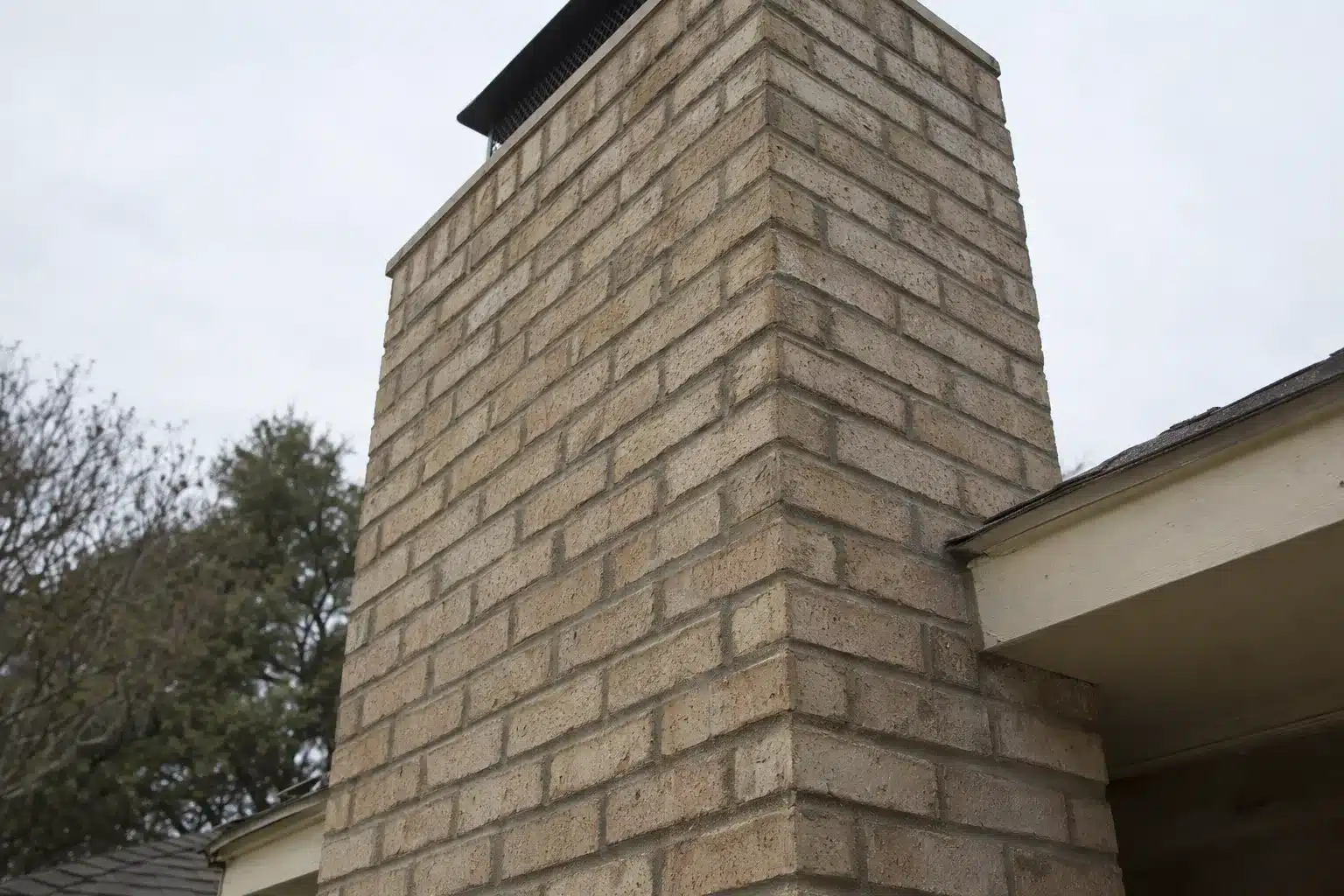
Getting the Right Product on Your Flue Matters More Than Most Homeowners Realize.
A mismatched cap or cover is one of the most common findings on our Dallas inspections. It either leaves the flue partially open, traps moisture under a solid lid, or fails to keep out birds and debris because the mesh gauge is wrong for local wildlife pressure.
Founded in 1991, The Chimney Inspection & Sweep runs 12 active crews across the Dallas-Fort Worth Metroplex. We have been evaluating chimney caps and covers on Dallas-area homes for over 33 years. Every inspection produces a written report documenting what is installed, whether it is correctly sized, and what, if anything, needs to change.
Our sweeping process uses HEPA containment systems, so when we remove a cap for cleaning or replacement, soot and debris do not migrate into your living space. When we combine a sweep with a cap inspection, we can document the full condition of the flue and crown in a single visit.
Dallas conditions create specific demands on chimney caps and covers: intense UV degrades galvanized steel faster than in cooler climates, hailstorms dent and crack caps not built for impact, and the area's large bird population, particularly European starlings and chimney swifts, makes mesh size selection more consequential than it is in most other regions.
What Each One Actually Is and Does
The industry uses both terms, and suppliers label products inconsistently. Here is the functional distinction that matters when you are deciding what your chimney needs.
Cap
Single-flue application
Chimney Cap
A chimney cap fits over a single clay tile or metal flue liner. It has a solid top to block rain and mesh sides to keep out birds and debris while allowing exhaust gases to exit. Standard sizing runs from 8x8 inches up to 13x13 inches for round or rectangular clay tiles. Stainless steel caps outlast galvanized in Dallas's UV environment by a significant margin.
- Fits one flue opening
- Mesh sides allow draft
- Correct for most single-fireplace homes
Cover
Multi-flue application
Chimney Cover
A chimney cover, sometimes called a multi-flue cap, spans the entire chimney crown and covers all flue openings at once. It is a single unit that sits on the crown surface and uses standoffs or clips to hold it above the flue tiles. This is the correct solution for chimneys with two or more flues, or when the crown itself is too deteriorated to anchor individual caps reliably.
- Covers entire chimney top
- Works with two or more flues
- Also protects the crown surface
Neither
When something else is needed
Damper-Top Cap
Some Dallas homes have no top-mount damper and rely only on a throat damper, which does not seal when the fireplace is not in use. A damper-top cap replaces the throat damper and seals at the top of the flue, eliminating conditioned air loss year-round. This is a separate product from either a standard cap or a cover, and it requires a site measurement to size correctly. See our chimney cap installation cost guide for those numbers.
- Replaces failing throat damper
- Seals flue when not in use
- Requires exact flue measurement
How to Tell Which One You Have
- 01Count the flue openings from the ground.
Use binoculars if needed. One clay tile or metal liner poking above the crown means you need a single-flue cap. Two or more openings point toward a multi-flue cover, unless the openings are spaced far enough apart to accept individual caps without interference.
- 02Check the crown condition.
A cracked or spalling crown cannot reliably anchor individual caps. A multi-flue cover that clips to the flue tiles directly bypasses this problem and also protects the crown from further water intrusion.
- 03Look at what is already installed.
A flat metal plate sitting over the entire chimney top is a cover. A smaller unit sitting directly on one flue tile is a cap. Some homes have nothing at all, which shows up during inspection as an open flue with debris or bird evidence inside.
- 04Assess mesh size.
Standard mesh is 5/8-inch galvanized or stainless. Smaller mesh catches more debris and can restrict draft on low-clearance fireplaces. Our technicians check mesh size against flue diameter as part of every six-point safety review.
Signs Your Current Cap or Cover Is Failing
Cap and cover problems rarely announce themselves until water damage or a bird nest is already inside the flue. These are the indicators we document on inspections:
- Rust streaks on the brick below the cap: galvanized steel oxidizing, often within 5-8 years in Dallas's heat.
- Chirping or scratching sounds from the firebox: birds or animals inside the flue, meaning the mesh has failed or was never the right size.
- Cap sitting crooked or visibly displaced: wind or hail impact, common after North Texas storm seasons.
- Water in the firebox after rain: check the cap first, then mortar joints and flashing as secondary sources.
For a broader look at chimney water problems, see our complete chimney leak guide.
How We Help You Choose the Right Option, Step by Step
01
Flue Count
Technician documents the number of flue openings from the roofline and their center-to-center spacing. This determines whether individual caps fit or a cover is required.
02
Crown Assessment
Crown condition is checked. A compromised crown surface changes the anchoring strategy and may indicate that a cover is the more practical long-term solution.
03
Flue Measurement
Each flue tile is measured at the outer dimension for cap sizing or at the tile top for cover standoff placement. Incorrect sizing is the most common installation error we correct on second-visit calls.
04
Material Selection
Stainless steel is the recommended material for Dallas. Galvanized steel is less expensive but typically shows rust within 5-10 years under local UV and weather conditions. Written report issued with all findings.
Cap vs. Cover: The Honest Decision Guide
Neither option is universally better. The right choice depends on your specific chimney configuration.
- Single flue, crown in good condition: a correctly sized single-flue cap in stainless steel is the straightforward answer. No reason to pay for a full cover.
- Two or more flues: a multi-flue cover is more reliable and often less expensive than buying and installing two separate caps, particularly when flue spacing is tight.
- Crown is cracked or deteriorating: a cover that bypasses the crown surface for anchoring protects the crown from further water damage while also covering the flues. Pair it with crown repair for a complete fix.
- Throat damper is failing: neither a standard cap nor a cover solves conditioned-air loss through an open throat. A damper-top cap is the right product for this problem.
- Active bird or wildlife entry: check mesh size on the existing cap before replacing it entirely. Sometimes re-meshing or installing a correctly gauged replacement cap resolves the problem without a full cover installation.
Why Dallas Conditions Change the Calculation
Material longevity is different in North Texas than in most national guides suggest. Galvanized steel caps that last 15 years in the Pacific Northwest may show significant rust in 7-10 years in Dallas because of UV intensity and the region's cycle of drought and heavy rain.
Hail is a real variable. A cap that takes a direct hit from large hail can be dented enough to block proper draft or crack a weld at the mesh attachment. After major hail events, cap inspection should be part of the post-storm checklist alongside roof and flashing review.
The NFPA 211 standard requires that chimney caps be in place and functional as part of a code-compliant installation. The Chimney Safety Institute of America classifies an absent or failed cap as a deficiency that must be noted in a written inspection report, which is standard practice on every job we run.
Before You Buy a Cap or Cover
A few specifics that help you avoid the most common purchasing mistakes and evaluate what a technician recommends.
Measure before you order. Cap sizing is based on the outer dimension of the clay flue tile, not the inner dimension. Getting this wrong by even one inch means the cap either does not seat correctly or sits loose and can be blown off. Our Dallas chimney inspection service includes a written measurement record so you have accurate specs on file.
Stainless steel outperforms galvanized in Dallas
The price difference between galvanized and stainless steel caps is typically $30-$80 at the unit level. Over a 15-year period in Dallas's UV and weather environment, stainless steel holds its structural integrity and mesh integrity significantly longer. For most homeowners, the upfront cost difference is the better value over time.
Check the mesh gauge, not just the mesh size
Standard 5/8-inch mesh blocks most birds and large debris. If you have had chimney swifts or small sparrows entering, 1/2-inch mesh is more effective. Going smaller than that restricts draft on lower-clearance fireplace systems. The correct gauge depends on your flue diameter and the specific wildlife pressure in your area of the Metroplex.
A cover does not substitute for crown repair
A multi-flue cover slows water entry at the crown, but it does not stop it if the crown is severely cracked. Water still enters through crown cracks, runs down behind the cover, and saturates the masonry. Crown repair and cover installation are complementary, not interchangeable. Plan for both if the crown shows active fractures.
Wind uplift is a real consideration for Dallas
North Texas severe weather generates sustained winds that can dislodge a cap that is not anchored correctly. Some cap designs use friction-fit mounting on the flue tile. Others use set screws or clamp systems. For homes in open areas or on elevated lots, a clamped or screwed installation is more reliable than friction-fit in the event of a severe storm.
Service Areas
Our 12 crews serve the full Dallas-Fort Worth Metroplex, including:
Find services near you →Also Inspect At the Same Visit
Urgent Issues We Also Handle
Chimney Cap vs. Cover: Common Questions
01Chimney cap vs. chimney cover: which do I need?
If your chimney has one flue and the crown is in good condition, a correctly sized single-flue cap is the right answer. If you have two or more flues, or if the crown is cracked and cannot anchor individual caps reliably, a multi-flue cover that spans the entire chimney top is the better solution. When neither option fits your situation, such as when a failing throat damper is the actual problem, a damper-top cap is a third distinct product worth evaluating.
02What is the difference between a chimney cap and a chimney cover?
A chimney cap mounts on a single flue tile and has a solid top with mesh sides. A chimney cover, also called a multi-flue cap, is a larger unit that sits on the crown surface and covers all flue openings at once. The cover uses standoffs to hold it above each flue tile so exhaust gases can still exit freely. The functional outcome is similar, but the mounting method, sizing, and application differ significantly.
03What material should a chimney cap be made of in Dallas?
Stainless steel is the recommended material for Dallas-area homes. Galvanized steel is less expensive at purchase but corrodes faster under North Texas UV exposure and the region's wet-dry weather cycles. Copper is a durable option but commands a significant price premium. For most homeowners, 304 or 316 stainless steel provides the best longevity-to-cost ratio in this climate.
04Can I install a chimney cap myself?
A single-flue friction-fit cap on a first-story chimney with easy roof access is mechanically straightforward. The more common problems are incorrect sizing and not identifying whether the chimney actually needs a cover instead of a cap. Installing the wrong product, or the right product at the wrong size, leaves the flue exposed. A Level 1 chimney inspection before purchase gives you accurate measurements and a written assessment of crown condition, which removes the guesswork.
05Does a chimney cover prevent birds from getting in?
Yes, if the mesh size is correct. Standard 5/8-inch mesh stops most birds, including the European starlings and house sparrows common in the DFW area. Chimney swifts can enter through larger mesh openings. Note that chimney swifts are a federally protected species under the Migratory Bird Treaty Act, so once a nest is active, removal requires waiting until the birds have left for the season. Getting the right cap or cover in place before nesting season, typically before March, is the more practical approach.
06How does a chimney cap affect draft?
A correctly sized cap with 5/8-inch mesh has minimal effect on draft in a properly functioning chimney. Problems arise when mesh becomes clogged with debris or creosote, reducing the open area available for exhaust. This is one reason cap inspection is included in our standard sweep visit. A clogged or heavily corroded mesh screen can contribute to draft problems that homeowners mistakenly attribute to other causes.
07How often should a chimney cap be inspected?
The NFPA 211 standard calls for annual chimney inspections, and cap condition is part of every Level 1 inspection. In Dallas, hail events and high UV exposure make it worth checking cap condition after any significant storm, in addition to annual service. The Chimney Safety Institute of America classifies a failed or missing cap as a documented deficiency, which matters for insurance and real estate disclosures.
- Level 1 vs. Level 2 vs. Level 3 Chimney Inspection: Which One Do You Actually Need?
- DIY vs Professional Chimney Inspection Level 3 DFW: Which Makes Sense?
- Chimney Mortar Leak vs. Flashing Leak: How to Tell the Difference
- DIY vs Professional Pilot Light Repair Dallas Fireplace: Which Makes Sense?
- What Is a Chimney Sweep? What They Do, What It Costs, and How to Choose One in DFW
- DIY vs Professional Refractory Fireplace Panel Replacement Dallas: Which Makes Sense?
- Chimney Sweep North Texas in Carrollton
- Refractory Fireplace Panel Replacement Dallas
- Level 1 vs. Level 2 vs. Level 3 Chimney Inspection
Schedule Your Chimney Cap Inspection Today
The difference between a cap and a cover matters. Installing the wrong one, or the right one at the wrong size, leaves your flue exposed to rain, wildlife, and debris. Getting an accurate assessment before spending money on hardware saves the most common form of wasted cost we see on second-visit calls.
Our crews have been inspecting and installing chimney caps and covers across Dallas and the DFW Metroplex since 1991. We measure, document the findings in a written report, and install what the chimney actually requires. No guesswork, no upselling to a cover when a cap is what fits.
The Chimney Inspection & Sweep · Dallas-Fort Worth Metroplex · In business since 1991 · Inspection & Cleaning Services · Cleaning Services · What Is a Chimney Sweep? · © 2026
Schedule Your Chimney Cap Inspection Today
The difference between a cap and a cover matters. Installing the wrong one, or the right one at the wrong size, leaves your flue exposed to rain, wildlife, and debris. Getting an accurate assessment before spending money on hardware saves the most common form of wasted cost we see on second-visit calls.
Our crews have been inspecting and installing chimney caps and covers across Dallas and the DFW Metroplex since 1991. We measure, document the findings in a written report, and install what the chimney actually requires. No guesswork, no upselling to a cover when a cap is what fits.
1991
Year Founded
33
Years Serving DFW
12
Active Field Crews
✓
Written Reports Every Job
The Chimney Inspection & Sweep · Dallas-Fort Worth Metroplex · In business since 1991 · Inspection & Cleaning Services · Cleaning Services · What Is a Chimney Sweep? © 2026