The Chimney Inspection & Sweep
What Is a Chimney Sweep?
What they do during a visit, what equipment they bring, what it costs in the DFW area, and how to tell a qualified sweep from one who is not.
- Founded
- 1991
- Years Operating
- 35
- Active Crews
- 12
- Service Area
- DFW
Origins & Definition
A Trade With 400 Years of History
Chimney sweeps appeared in England during the 1600s, after coal became the dominant fuel for heating. Burning coal left thick, sticky deposits inside the flue, and building owners hired workers, often children, to climb inside and scrape the walls clean. The practice was dangerous and poorly regulated for most of its history.
The modern chimney sweep has nothing in common with that image except the name. Today's sweep arrives with rotary brush systems, HEPA-filtered vacuum rigs, and inspection cameras. The work is methodical and documented. Most certified sweeps complete continuing education every few years to maintain their credentials. In the United States, the Chimney Safety Institute of America (CSIA) sets the certification standard that most insurers and home inspectors recognize.
Certification is not the only thing worth checking. A sweep working on Texas homes should also be able to produce a certificate of general liability insurance and show a registered business entity. Those confirm legitimacy; CSIA certification confirms technical competency. A qualified sweep in DFW can produce both.
Why Creosote Is the Core Problem
When wood burns, the smoke carries water vapor, carbon particles, and volatile gases. As that smoke cools inside the flue, those particles condense on the liner walls. The resulting deposit is creosote. It comes in three forms: a light, flaky residue that brushes out easily; a tar-like coating that requires rotary tools; and a hard, glazed crust that sometimes needs chemical treatment before mechanical cleaning. A sweep identifies which type is present before choosing the right removal method.
The CSIA Standard
The Chimney Safety Institute of America sets the national competency benchmark for chimney technicians. CSIA-Certified Chimney Sweeps pass a written examination covering draft, combustion, clearances, and code standards. Certification must be renewed on a set cycle. You can verify any sweep's CSIA status by searching the public directory on csia.org.
Verify a sweep at csia.orgWhat Happens During a Sweep Visit
A sweep-only appointment and a sweep-plus-inspection appointment are not the same visit. Here is what each one covers.
Sweep-Only Visit
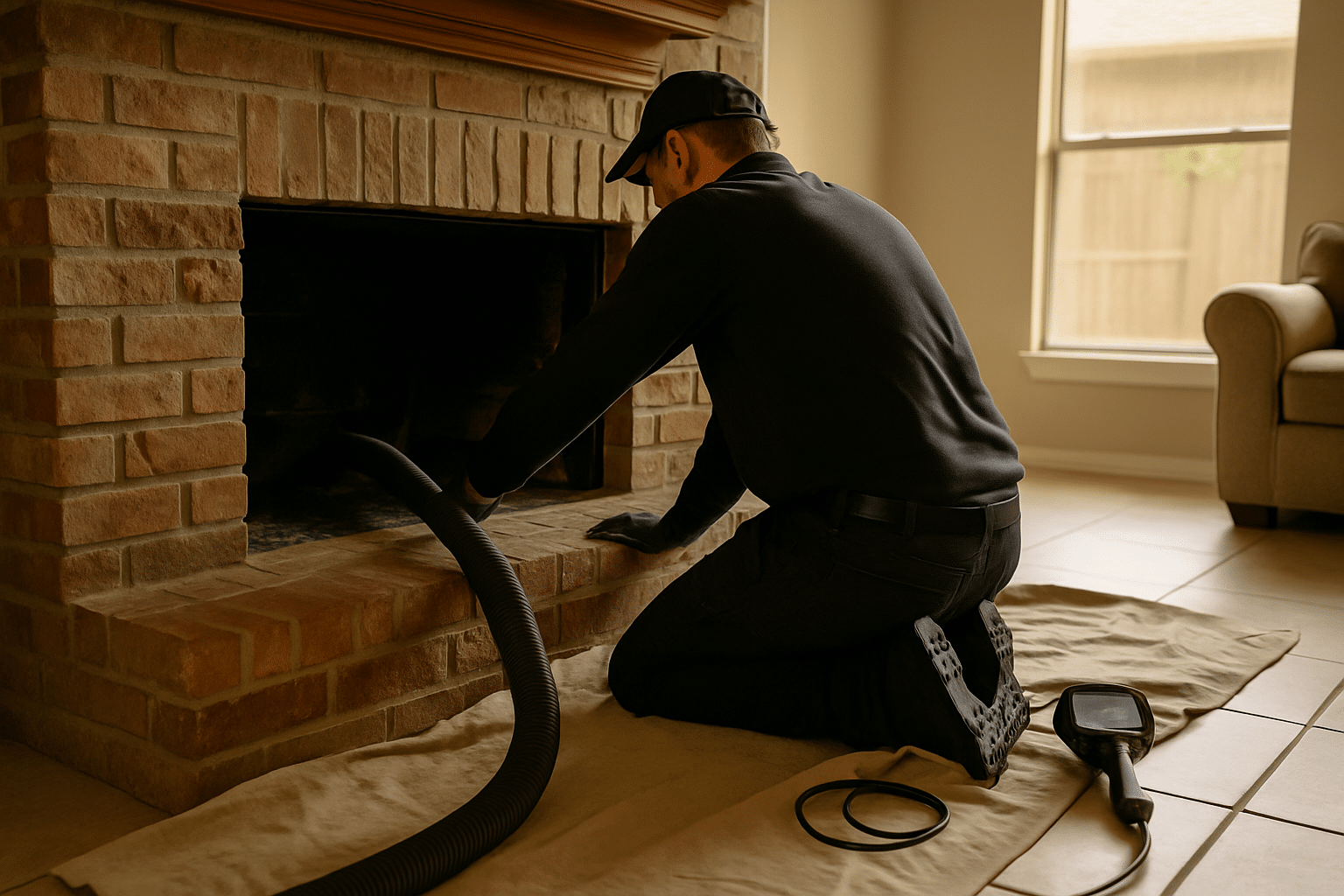
- The technician covers the hearth and surrounding floor with drop cloths and seals the firebox opening before any brushing begins. This prevents soot and creosote from entering the living space.
- A HEPA-filtered vacuum runs continuously during cleaning. The vacuum creates negative pressure inside the firebox, pulling debris down rather than letting it drift into the room.
- Rotary nylon or polypropylene brushes, matched to the flue's diameter and shape, scrub the liner from the firebox opening up to the crown or from the rooftop down, depending on access.
- The technician removes the collected debris, wipes down the firebox interior, and confirms the damper opens and closes correctly.
- Most residential sweep jobs take between one and two hours, depending on flue height and how much buildup is present.
Sweep-Plus-Inspection Visit
- Everything in the sweep-only visit, plus a systematic review of the chimney structure from the firebox to the crown.
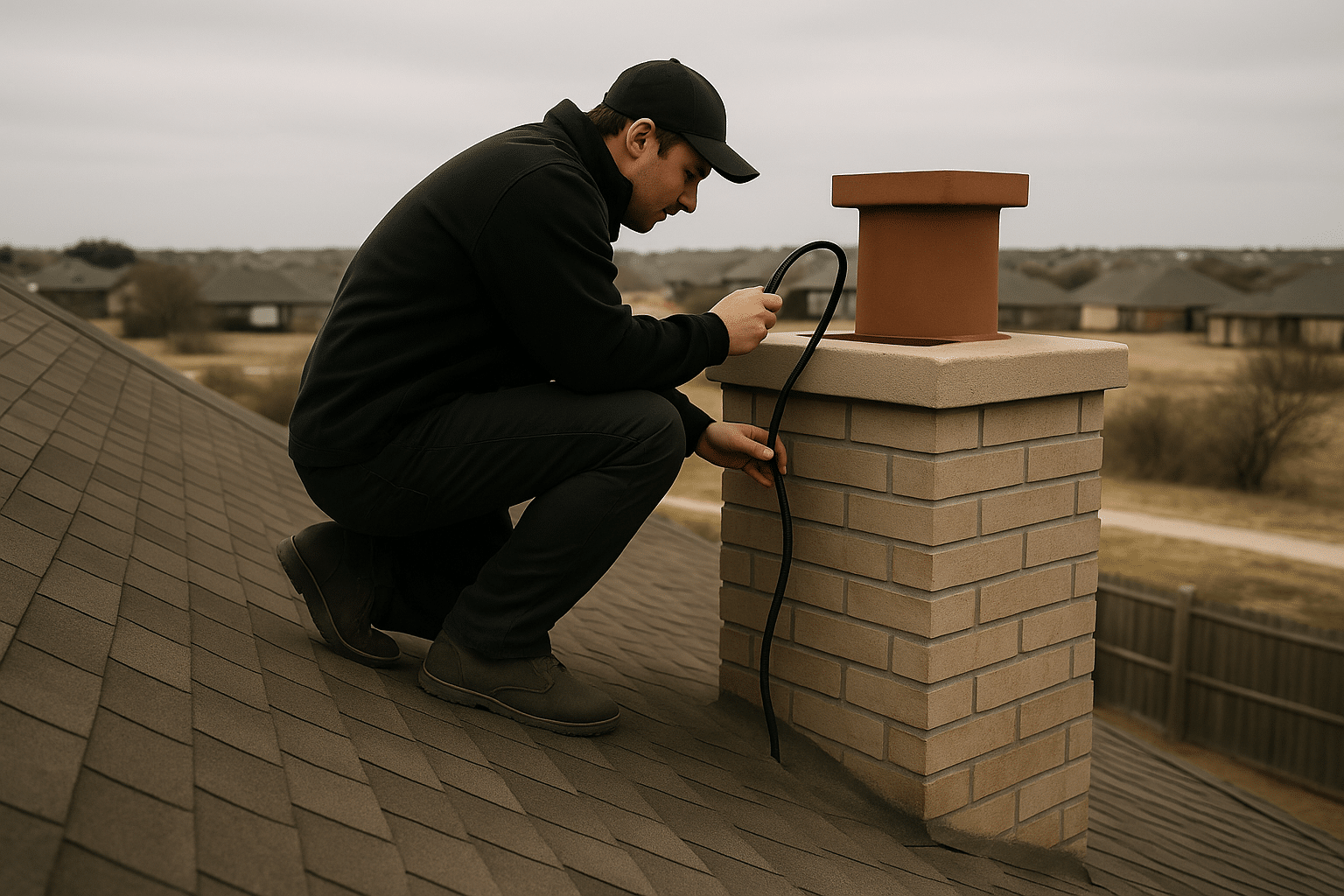
- A Level 1 inspection covers accessible portions of the interior and exterior that are visible without moving appliances or opening walls. It confirms the system is structurally sound and free of deposits for continued use.
- A Level 2 inspection adds camera equipment. The technician runs a video camera through the full length of the liner to check for cracks, mortar joint failure, or blockages that are not visible to the naked eye. Level 2 is the standard called for when a property changes ownership.
- The sweep documents findings in writing. A written report is the deliverable, not just a verbal summary.
- These combined appointments typically run two to four hours for a single-flue system.
Equipment a Qualified Sweep Brings
The tools a sweep arrives with tell you a lot about their operation. A rotary brush system is standard on any professional job. It consists of a flexible rod that extends through the flue, driven by a drill or purpose-built motor, with brush heads sized to the specific flue dimensions. Flat-wire brushes handle round clay tile liners; poly brushes handle stainless steel inserts.
The HEPA vacuum is non-negotiable. Standard shop vacuums pass fine particulate back into the air. A HEPA filter captures particles down to 0.3 microns, which includes the fine ash and soot that would otherwise coat surfaces throughout the room. Any sweep who shows up without one is cutting corners.
For inspection-level visits, a push-rod or pan-and-tilt camera provides the documentation. The camera runs through the full liner and the footage is typically recorded so findings can be reviewed later. If a sweep offers an inspection but brings no camera, that is a Level 1 visual check, not a Level 2 scan. You should know which one you are getting before the appointment starts. Learn more about the specific tools involved at our chimney sweep tools guide.
Cost & Frequency
What It Costs and How Often You Need It
NFPA 211 calls for chimneys, fireplaces, and vents to be inspected at least once a year, with cleaning and repair carried out as that inspection indicates. That frequency is a minimum, not a ceiling.
nfpa.orgAnnual Cleaning for Active Wood Burners
If you burn wood regularly from October through March, one annual cleaning before the season starts is the baseline. If you burn more than two or three cords of wood per year, a mid-season check is reasonable. Creosote accumulates faster than most homeowners expect, especially with fires that smolder rather than burn hot.
Gas Fireplace Inspection Schedule
Gas appliances produce less debris than wood fires, so cleaning is needed far less often. Inspection is a different matter: blockages from bird nests, wasp nests, or deteriorated liner sections affect gas systems just as they do wood-burning ones, and a blocked gas vent carries carbon monoxide risk. Annual inspection is still the right interval for gas, even though cleaning frequency is lower. Our team also handles chimney wasp removal if pests have taken up residence in your flue.
Typical Price Ranges in DFW
Pricing varies with flue height, liner condition, and the scope of work. A standard sweep-only appointment for a single flue typically falls in a range that reflects the local labor market and the equipment required. A combined sweep-and-Level-2-inspection costs more because of the camera time and documentation involved. Any company quoting a flat price without asking about your system first is estimating blind. Get an itemized written quote.
The Damper Connection
During any sweep visit, the technician checks your damper's operation. A stuck or warped damper is a common finding, especially in older DFW homes. If it is not sealing correctly, conditioned air escapes year-round and smoke can back-draft into the living space. Understanding how your damper works is useful context before your appointment. Our guide on what a chimney damper does covers the mechanics in plain terms.
DFW-Specific Guidance
How to Find and Vet a Chimney Sweep in Dallas and Fort Worth
The DFW market has no shortage of chimney companies. That range of options means the gap between a well-equipped professional and an under-qualified operator is wider than in smaller markets.
Verify CSIA Certification First
Ask for the technician's CSIA certification number. Then check it at csia.org before the appointment. The directory is public and current. A company can claim CSIA affiliation in its marketing while fielding uncertified technicians. The certificate belongs to the individual, not the company.
Check the Business Is Real
Look up the company name with the Texas Secretary of State and check its Better Business Bureau record. A registered entity with a physical address and a complaint history you can read is a very different proposition from a phone number on a door hanger. Both checks take about two minutes.
Confirm Liability Insurance
Ask for a certificate of insurance, not just a verbal confirmation. General liability coverage protects your property if something goes wrong. A company operating without it creates real financial exposure for the homeowner. If they hesitate to produce documentation, move on.
Questions to Ask Before Booking
- Which CSIA certification does the technician hold, and what is their certification number?
- Do you use a HEPA-filtered vacuum during cleaning?
- Will you provide a written report of findings, not just a verbal summary?
- If I am booking an inspection, does it include camera documentation of the full liner?
- Can you provide a certificate of general liability insurance before the appointment?
- What is included in the quoted price, and what would trigger an additional charge?
Red Flags to Watch For
These are patterns that show up repeatedly in complaints filed against chimney companies with the Better Business Bureau and state consumer protection offices.
- Cash only, no written receipt. Legitimate contractors accept cards and provide receipts.
- No camera on an inspection visit. If they call it a Level 2 inspection but bring no camera, the work does not meet the standard.
- Unable to display credentials. A certified sweep should have their card or a printout from the CSIA directory available on request.
- Same-day pressure to approve major repairs. Legitimate findings get documented in writing, with time for a second opinion if the scope is large.
- A standard shop vacuum instead of a HEPA-filtered unit. You will find out the hard way when soot settles on your furniture.
Finding Local Help
Service Areas Across the Metroplex
Our 12 active crews cover the full DFW Metroplex. That spread matters because chimney work is time-sensitive in the fall, and a company with a single truck will schedule you weeks out once the weather turns cold. Having multiple crews in rotation means we can typically schedule within a week, even at peak season.
If you are looking for service in a specific part of the metro, we have dedicated service area pages with local scheduling information:
Cleaning Services
Full-service chimney cleaning using HEPA containment and rotary brush systems.
Chimney Cleaning ServicesMetal Chimney Cleaning
Specialized cleaning for factory-built metal fireplaces and stainless steel liner systems.
Metal Chimney CleaningMasonry Repair
Tuckpointing, crown repair, and liner restoration after inspection findings are documented.
Masonry Repair GuideFrequently Asked Questions
Can I sweep my own chimney?
Consumer brush kits exist and some homeowners use them for light maintenance. The problem is containment. Without a HEPA vacuum system creating negative pressure at the firebox, brushing the flue sends fine particulate throughout the house. Beyond the dust issue, a DIY brush check cannot evaluate liner condition, damper function, or the crown and cap. Cleaning and inspection are two different jobs, and the inspection part requires camera equipment and trained eyes.
How do I know if my chimney needs cleaning?
The honest answer is that you often cannot tell without looking inside. Creosote accumulates on the upper liner sections first, where temperatures drop fastest, and that portion of the flue is not visible from the firebox. If you have burned a full cord or more of wood since the last cleaning, schedule one. If you notice smoke pulling into the room, a strong odor when the fireplace is not in use, or visible black buildup on the damper plate, those are observable signals.
What is the difference between a Level 1 and Level 2 inspection?
Level 1 is a visual inspection of accessible areas: the firebox, damper, visible portions of the flue from above and below, and the exterior crown and cap. No camera, no special equipment. Level 2 includes everything in Level 1 plus video scanning of the full liner. Level 2 is the standard called for when a home is sold, after a chimney fire, or when changes are made to the appliance or fuel type. Our chimney inspection and cleaning services page explains both levels in more detail.
Do gas fireplaces need chimney sweeps?
Gas fireplaces do not produce creosote, but the venting system still needs inspection. Bird nests, wasp nests, and deteriorated liner sections block gas exhaust just as they block wood smoke. Carbon monoxide risk from a blocked gas vent is more immediate than fire risk from creosote. Annual inspection is still appropriate for gas systems, even if cleaning frequency is lower. Our chimney professionals handle both fuel types across the Metroplex.
Ready to Book
Schedule With a CSIA-Certified Crew
We have been running chimney crews across DFW since 1991. Every technician we send is CSIA-certified. Every job comes with a written report. Whether you want the sweep-only appointment or the full sweep-plus-Level-2-inspection, our certified chimney sweep services page walks through what to expect and how to book.
For specific service needs beyond a standard sweep, our team also covers chimney flashing repair, pilot light work, and fireplace repair across the Metroplex.
Serving All of DFW
12 active crews covering Dallas, Fort Worth, and surrounding communities from Frisco to DeSoto.
CSIA-Certified Technicians
Every technician holds individual CSIA certification. Verifiable by number on csia.org before any appointment.
Written Documentation
Every inspection produces a written report. Not a verbal walk-through, a documented record of findings you can keep on file.
© 2026 The Chimney Inspection & Sweep. All rights reserved.
Operating in DFW since 1991.