Chimney Leak Repairs That Hold Through North Texas Storm Seasons
33 years of DFW leak repair experience – compounding failures addressed, not just the visible one.

Chimney Leak Repair in Dallas Fixes the Source, Not Just the Symptom
Chimney leak repair in Dallas means finding every entry point and fixing them in the right order.
A chimney that leaks in one spot usually has more than one problem. The flashing pulls away from the mortar bed. Water gets behind the joints. A North Texas ice event widens a crack that was already forming. By the time a homeowner calls, the original failure has often activated a second one.
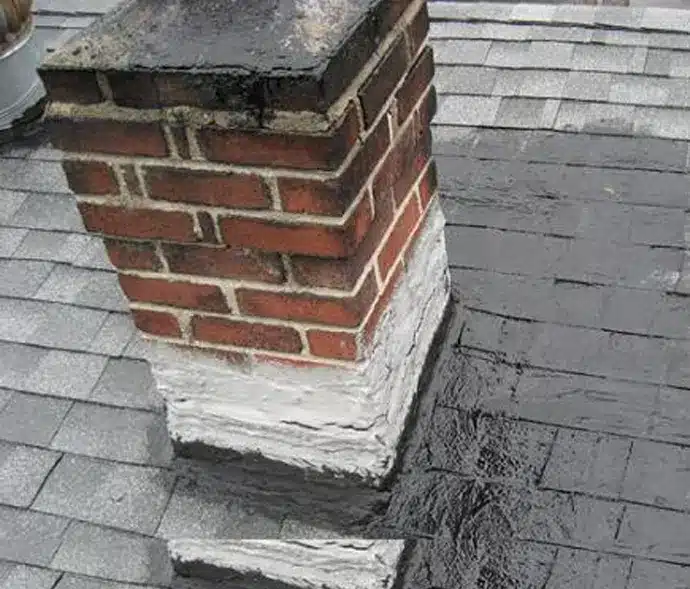
Chimney leak repair covers five source categories: crown patching or rebuild, flashing reseal or replacement, mortar repointing, spalling brick replacement, and waterproof sealant application. Each repair targets a specific entry point. The sealant comes last – after every structural repair is confirmed solid.
That sequence is what separates a repair that holds from one that fails before the next storm season.
Why Dallas Chimneys Leak the Way They Do
North Texas weather puts masonry under stress in multiple ways at once.
DFW gets real winter. Not every year, but when a hard freeze arrives – like the ice events that hit the Metroplex in recent winters – water that has settled into hairline cracks expands and forces those cracks wider. By spring, what was a minor gap is now a legitimate entry point.
Then come the spring storms. Dallas averages more than 37 inches of rain annually, with the heaviest totals landing between March and May. That rain finds every crack the ice opened.
The communities northeast of Dallas – Richardson, Addison, Garland – sit directly in the path of storm systems that move through the Metroplex each spring. Older masonry stock in those areas sees this cycle every year. Chimneys that went multiple seasons without maintenance often show compounding failure: one source wasn’t addressed, so the water that got through accelerated the next one.
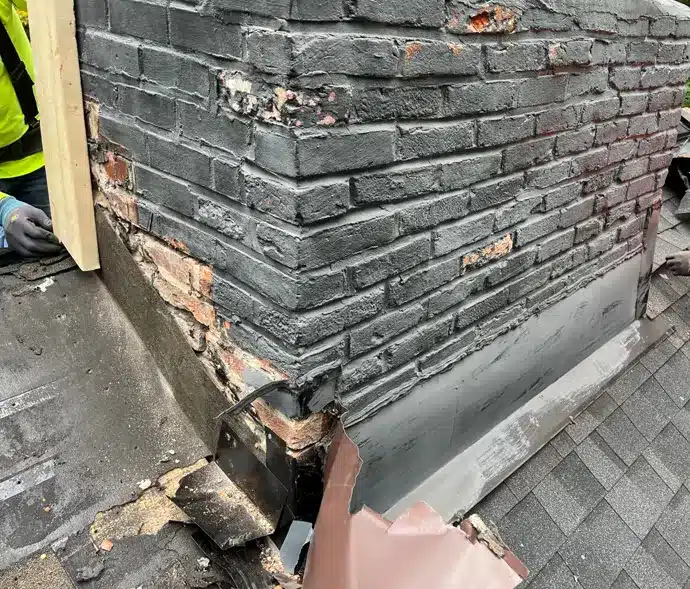
What a Three-Source Leak Looks Like in the Field
A leaking chimney often traces back to more than one failure – here’s what that looks like in practice.
A homeowner in Richardson called because water was showing up inside the firebox after heavy rain. They assumed it was the flashing. They were right – but only partly.
On the roof, the counter-flashing had separated from the mortar bed. That was the obvious entry point. But the crown showed surface cracks running toward the flue collar. And the mortar joints on the north-facing side of the chimney – the side that stays damp longest after rain – had softened back from the brick face by close to a quarter inch on three or four sections.
The flashing was the first failure. The water that got in through that gap had been working into the mortar joints for at least a season, softening them from the inside. The crown cracks were letting water in from the top at the same time.
Resealing only the flashing would have brought the call back. The crew repointed the failing joints, patched the crown surface cracks with elastomeric sealant, and replaced the flashing seal – then, after everything was confirmed solid and dry, applied a vapor-permeable sealant across the exterior masonry.
That’s what chimney leak repair is supposed to accomplish.
Why Repair Sequencing Determines Whether a Fix Holds
The most common reason a chimney leak repair fails is incomplete source identification.
Sealant alone doesn’t fix a chimney that’s leaking because of failed flashing or cracked mortar. It covers the surface. The water finds another path – usually within one or two rainstorms.
The Chimney Inspection & Sweep uses a repair sequencing protocol: structural repairs first, sealant last. Every time. Crown, flashing, mortar joints, and brick are addressed before the waterproof coating goes on.
A vapor-permeable water repellent – the sealant type that allows moisture trapped inside the masonry to escape outward – is the correct final step. Applying a film-forming sealer over damp or partially saturated brick traps moisture inside. That causes the kind of damage the sealant was supposed to prevent.
If a previous repair didn’t hold, the source wasn’t fully addressed, or the sealant went on before the structure was solid. That’s fixable – it requires starting from the actual entry points.
Our Standards for Chimney Leak Repair in Dallas
Every repair is sequenced, documented, and verified before the crew leaves.
Here’s how we approach chimney water damage repair in Dallas:
- Source identification first. Crown, flashing, mortar joints, and brick are each assessed before any repair material is applied.
- Crown patching vs. crown rebuild. Surface cracks on a structurally sound crown get an elastomeric sealant. A crown that has failed through its full depth gets removed and rebuilt with proper overhang and slope.
- Flashing repair addresses both components. Base flashing and counter-flashing are inspected and repaired together. A partially fixed flashing system still leaks.
- Mortar repointing matched to the original mix. The mortar type, hardness, and color are matched to the existing joint material before repointing begins.
- Spalling brick replaced to match. Replacement bricks are sourced for color, texture, and size before installation.
- Sealant applied only after structural confirmation. Vapor-permeable water repellent goes on last – after all structural repairs are cured and verified.
How We Repair a Leaking Chimney in Dallas
Diagnostics
The visit starts on the roof. We assess the crown surface for cracks and structural integrity. We check the flashing at both the base and counter-flashing layers. We inspect the mortar joints on all four faces – north-facing joints in Dallas deteriorate differently than south-facing ones under direct sun. We check the brick face for spalling that indicates water is already moving through the material.
The homeowner hears what we found before any work begins.
Implementation
Repairs begin at the structural level. If the crown needs patching, that goes first. If the flashing needs re-embedding into the mortar bed, that’s done before surface caulk is applied. Mortar joints are raked to the required depth – at least three-quarters of an inch – and filled with matched mortar. Spalled brick is removed and replaced.
Materials go on in the correct order. Sealant over a broken crown doesn’t fix a broken crown.
Post-Service Confirmation
After all repairs are complete and cured, we apply the vapor-permeable water repellent to the exterior masonry. This is the protective final layer – not a substitute for structural repair. We confirm coverage on the crown surface, the mortar joints, and the brick face before leaving.
The homeowner gets a summary of what was repaired and what was sealed. If we found anything during the inspection that falls outside the repair scope – a liner issue, a cap that needs replacement – that’s noted separately so it can be addressed on its own timeline.
Areas We Serve for Chimney Leak Repair
Repair crews are available across Dallas and the surrounding DFW communities.
The Chimney Inspection & Sweep serves Dallas, Plano, Carrollton, Irving, McKinney, Frisco, Allen, Garland, Richardson, Addison, Arlington, and surrounding areas across the DFW Metroplex. Crews are available across the service area for both scheduled repair visits and urgent post-storm calls.
Frequently Asked Questions About Chimney Leak Repair
What causes chimney leaks?
Chimney leaks are commonly caused by damaged flashing, cracked chimney crowns, deteriorating mortar joints, missing chimney caps, or worn waterproofing materials. Heavy rain, humidity, and temperature changes can gradually damage masonry and allow water to penetrate the chimney structure. Even small leaks can lead to major water damage if left untreated.
How can I tell if my chimney is leaking?What does a chimney sweep cost in Dallas?
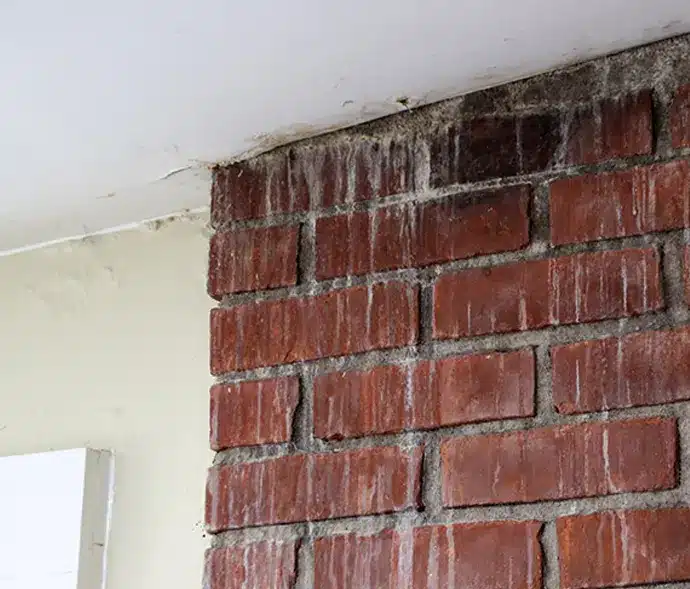
Signs of a leaking chimney often include water stains on ceilings or walls near the fireplace, musty odors, peeling paint, damp bricks, rust on the fireplace or damper, and visible cracks in the chimney exterior. In some cases, homeowners may notice water dripping directly into the firebox after rainstorms. A professional chimney inspection can identify the exact source of the leak.
Is chimney waterproofing worth it?
Yes, chimney waterproofing is one of the best ways to protect masonry from water damage and extend the life of your chimney. Professional waterproofing products create a breathable barrier that prevents moisture penetration while still allowing trapped vapor to escape. Waterproofing helps reduce cracking, spalling bricks, mold growth, and costly structural repairs over time.
Can a leaking chimney cause structural damage?
Yes, ongoing chimney leaks can eventually weaken the chimney structure and surrounding areas of the home. Water intrusion can damage brickwork, mortar joints, ceilings, walls, insulation, and wooden framing. Over time, untreated moisture can also lead to mold growth and expensive repairs. Addressing chimney leaks early helps prevent larger structural problems.
How long does chimney leak repair take?
The timeline for chimney leak repair depends on the source and severity of the problem. Minor repairs such as sealing flashing or applying waterproofing may be completed in a single visit, while more extensive masonry repairs or crown rebuilding can take several days. A professional inspection helps determine the best repair solution and expected timeline.
Schedule Your Chimney Leak Repair in Dallas
Call before the next storm finds the same gap.
Call The Chimney Inspection & Sweep at 972-884-5553 or email info@theonechimneysweep.com to schedule your repair visit. Tell us where the water is showing up and when you first noticed it. We’ll map the source and give you a clear picture of what the fix involves before any work begins.

Chimney repair is one of our main services.
We also offer a free home fire safety check at every service appointment.
Information
Service Areas
- Dallas
- Plano
- Carrollton
- Irving
- McKinney
- Frisco
- Allen
- Garland
- Richardson
- Addison
- Arlington
© 2024 – 2025 | All Rights reserved by The Chimney Inspection & Sweep
Powered By Rank First Labs