
Gas Fireplace Remote Control Installed After a Full System Compatibility Check
We verify valve type, thermopile output, and pilot assembly before selecting your kit.
Pilot Light and Ignition Repair in Dallas: Typical price $253 – $459
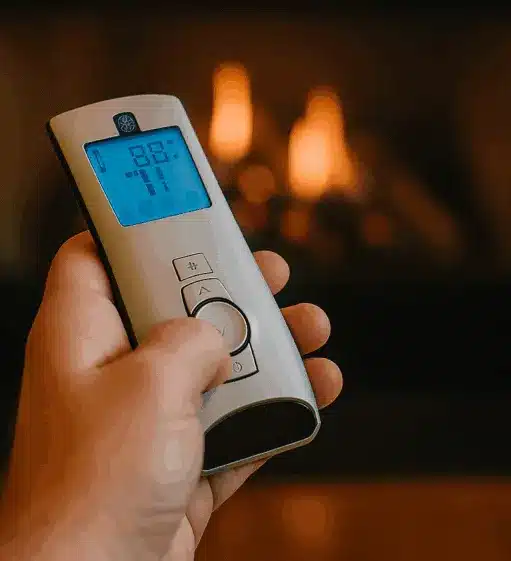
What a Pilot Light Remote Control Upgrade Actually Changes in Your Home
A remote control upgrade converts your gas fireplace from a manual process into a one-button system.
Right now, lighting your fireplace probably looks like this: crouch down, locate the valve, hold it in, click the igniter, and wait. If you have a standing pilot light – a small, continuously burning flame that keeps the ignition ready – that flame runs all day, every day, whether you use the fireplace or not.
A pilot light remote control upgrade changes both of those things. Here is what most homeowners do not realize about this kind of upgrade. It is not just about convenience. A standing pilot light consumes gas continuously. In Dallas, where mild winters mean most fireplaces only run a few months per year, that standing flame burns gas the other eight or nine months without producing any warmth at all.
An RF remote kit – a radio frequency system that works through walls without line-of-sight – lets you ignite and extinguish your fireplace from across the room. Many kits also convert your system to intermittent pilot ignition (IPI), meaning the pilot only lights when you turn the fireplace on. No continuous burn. No daily crouching. That is a meaningful change for any gas fireplace household in Dallas.
Three Decades of Gas Fireplace Systems Across Dallas
DFW’s gas fireplace stock spans three different ignition eras – and each one requires a different approach.
The Chimney Inspection & Sweep has been working across the Dallas metro since 1991. Our team has seen gas fireplaces from the early-90s standing pilot era, the mid-2000s millivolt valve generation, and the post-2010 IPI-ready systems that came pre-wired for remote kits.
Here is the local detail that matters. Homes along the Dallas North Tollway corridor – from North Dallas through Plano, Frisco, and McKinney – were largely built between 1995 and 2015. That era produced a dense concentration of millivolt valve systems. A millivolt gas valve is powered by the small electrical current produced by the pilot’s thermopile – that current is what a remote kit connects to. Most of those systems are compatible with an RF remote overlay. The valve output has to be measured first.
Older homes near White Rock Lake and the Oak Cliff area often have earlier-generation standing pilot assemblies. Those sometimes need a thermopile assessment before any kit is recommended. Thirty-plus years in this market means we recognize the system before we pull out a single tool.
How One Compatibility Check Saved a Frisco Homeowner From a Valve Replacement He Didn't Need
The right diagnostic prevents you from buying hardware your system cannot support.
One job in Frisco – a 2003-build, gas log set installed in a converted wood-burning firebox. The homeowner had already purchased a remote kit and was ready to install it himself.
Thermopile output came back at 650 millivolts. That is well above the 300-millivolt threshold most remote kits require to operate reliably. His system did not need a valve replacement. The existing millivolt gas valve was fully compatible with the kit he had chosen.
Here is where it got interesting. The gas log set in that firebox was an older open-flame burner configuration. The remote kit’s wiring harness had to be routed differently than it would in a sealed gas fireplace unit. The ignition circuit also required a jumper adjustment that the kit’s instructions did not mention. Installation was complete in about two hours. He tested it from his couch. Worked correctly.
That compatibility check took fifteen minutes. Without it, he might have assumed the valve was faulty when the kit behaved unpredictably – and replaced a valve that did not need replacing. That is why we assess before we recommend anything.
Every Kit We Install Gets Tested Under Real Operating Conditions Before We Leave
We run a full flame test at operating temperature before we pack up the tools.
A remote kit can appear to work during a cold bench test and still misfire under operating heat. Thermopiles produce slightly different millivolt readings when the pilot is running at full temperature versus when it first lights. We test at full operating temperature – not just at ignition.
If the remote signal is intermittent, we check RF interference. In dense suburban neighborhoods like Richardson or Addison, competing wireless signals occasionally affect performance. We adjust transmitter frequency or antenna placement before calling the job complete.
You watch the final test. We want you to see the flame respond in real time before we leave.
How We Assess, Select, and Install Your Remote Control System - Step by Step
Every install starts with a system read – not a sales recommendation.
- Valve Type Identification: We confirm whether your system runs on a millivolt gas valve or a 24-volt system. These require different kit types.
- Thermopile Output Test: We measure the millivolt output of your thermopile to confirm it can power a remote kit reliably.
- Pilot Assembly Inspection: We check the standing pilot assembly for debris, thermocouple condition, and igniter function.
- Kit Matching: We select an RF remote kit sized to your valve output and firebox configuration – gas log set or sealed unit.
- IPI Conversion Assessment: If your system qualifies, we advise on converting to intermittent pilot ignition to eliminate standby gas consumption.
- Installation and Calibration: We wire, route, and calibrate the kit to your specific firebox geometry and valve position.
- Final Documentation: We leave you with the remote pairing instructions and any valve adjustment notes for future reference.
What the Installation Day Looks Like From First Call to Final Flame Test
System Compatibility Assessment
The first step is a system compatibility assessment. We identify your valve type, test your thermopile, and inspect the pilot assembly. This typically takes 20-30 minutes and happens at the start of the appointment. If your system is compatible – which most DFW-era gas fireplaces are – we move directly into installation.
Installation and Wiring
We install the RF remote kit, route the wiring harness, and make any ignition circuit adjustments the kit requires. Gas log set installations and sealed gas fireplace unit installations differ in how the harness is positioned. We handle both configurations regularly across the Dallas metro.
Flame Test and Handoff
Before we leave, we run a full flame test at operating temperature. We test remote range from multiple points in the room. We confirm the IPI cycle – if applicable – activates and extinguishes cleanly. You use the remote yourself during the final test. We want you comfortable with the system before we close out the job.
Pricing & FAQs
Gas Fireplace Remote and Pilot Cost in Dallas
Typical price ranges for gas fireplace remote and pilot across Dallas and the DFW Metroplex. Smaller, simpler jobs sit at the low end.
| Service | Typical price |
|---|---|
| Pilot assembly or thermocouple | $253 – $459 |
| Ignition module replacement | $325 – $619 |
| New pilot systemValve plus pilot, or full gas system repair | $1,349 – $3,800 |
| Manual lighting solution | $485 |
Your exact price is confirmed on site before any work starts. Smaller, simpler jobs sit at the low end of each range. Our $79 chimney safety inspection is waived when you book the repair.
FAQ
How much does a pilot light remote control installation cost in Dallas?
Call 972-884-5553 for current rates. Cost depends on your valve type, whether IPI conversion is included, and the firebox configuration - gas log set or sealed unit. The compatibility assessment happens before any kit is recommended, so you're never quoted for hardware your system can't support.
Can a remote control kit be added to any gas fireplace, or are some systems incompatible?
Most DFW-area millivolt gas valve systems are compatible with an RF remote kit. Compatibility depends on thermopile output, valve type, and pilot assembly condition. Systems producing below 300 millivolts may need a thermopile replacement before a kit can operate reliably. Your technician measures output during the assessment - before any hardware is selected.
Does adding a remote control kit mean my standing pilot will still burn continuously?
Not necessarily. Many RF remote kits convert a standing pilot system to intermittent pilot ignition (IPI). IPI only lights the pilot when you turn the fireplace on. That eliminates continuous gas consumption during the months the fireplace sits unused - which is most of the year for a typical DFW home.
How long does the full remote control installation take from assessment to final test?
Most remote control upgrades are complete in a single visit of two to three hours. The compatibility assessment takes 20-30 minutes. Installation and wiring follow directly. The final flame test at operating temperature adds time - but that step isn't skipped, because a cold bench test doesn't catch every operating-condition issue.
Gas Fireplace Remote Upgrades Available From White Rock Lake to McKinney
We cover the full Dallas-Fort Worth metro for pilot light remote control installation. Our service area includes Dallas, Plano, Carrollton, Irving, McKinney, Frisco, Allen, Garland, Richardson, Addison, Arlington, and surrounding communities. Whether you are in an older Dallas neighborhood or a newer Frisco or Allen subdivision, our team reaches you.
Ready to Stop Lighting Your Fireplace by Hand? Here's How to Book
A one-button gas fireplace is one call away. Call us at 972-884-5553 or email info@theonechimneysweep.com to schedule your compatibility assessment and remote control installation. Tell us your fireplace type when you reach out – gas log set or sealed unit – and we will confirm your booking details from there. With 12 crews across Dallas-Fort Worth and more than 850 verified reviews, we are ready when you are.

Chimney repair is one of our main services.
We also offer a free home fire safety check at every service appointment.
Information
Service Areas
- Dallas
- Plano
- Carrollton
- Irving
- McKinney
- Frisco
- Allen
- Garland
- Richardson
- Addison
- Arlington
© 2024 – 2025 | All Rights reserved by The Chimney Inspection & Sweep
Powered By Rank First Labs