
Cracked Flue Tiles Relined: Chimney Liner Installation in Dallas, TX
Cracked clay tiles, gas appliance changes and failed inspections, fixed with a properly sized stainless steel liner.
Chimney Liner Installation in Dallas: Typical price $4,386 – $9,500
What a Chimney Liner Does and Why It Matters
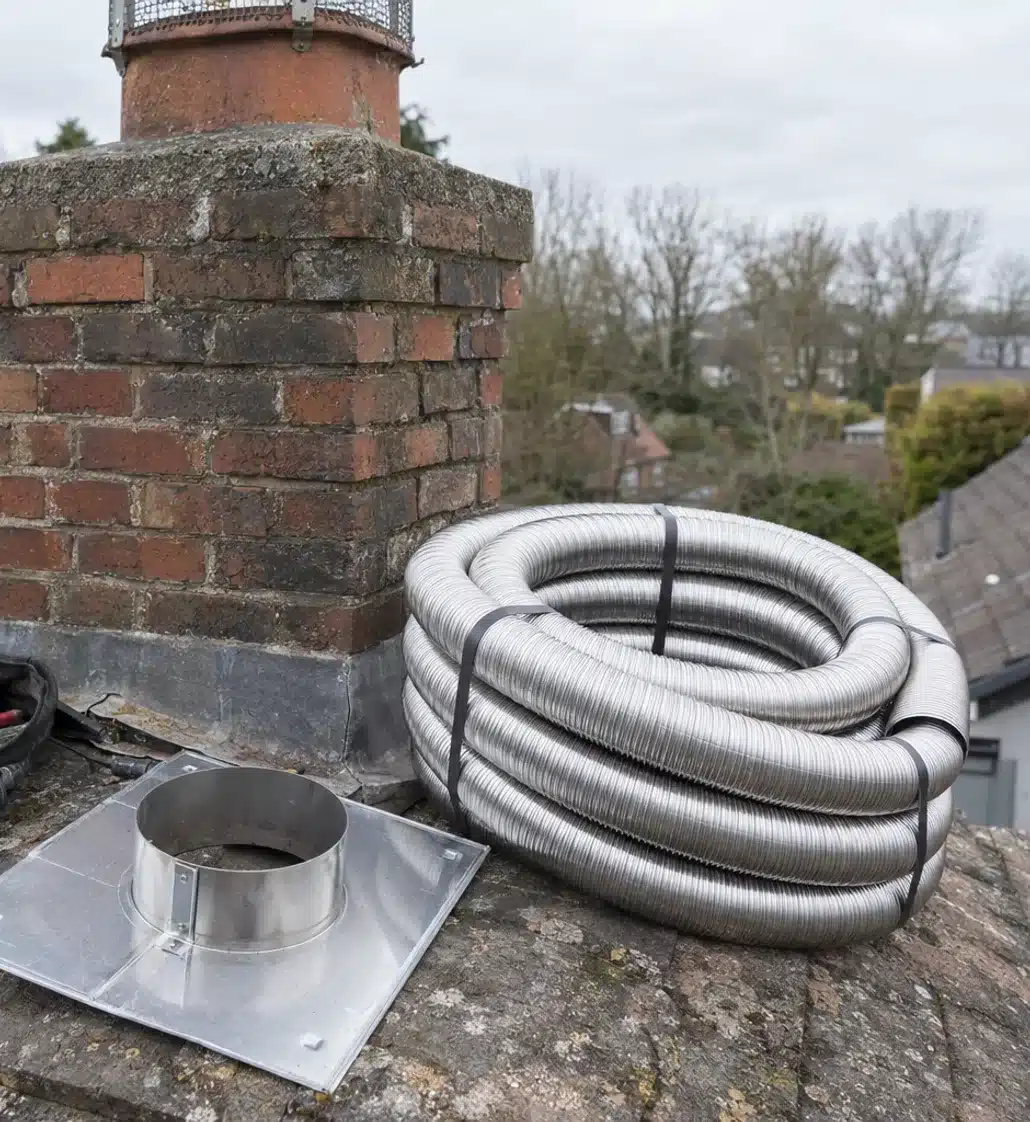
The liner is the inner wall of your chimney: the channel that carries smoke and combustion gases from the fireplace or appliance up and out of the house. In most Dallas homes built before the 2000s, that liner is a stack of clay flue tiles. Newer factory-built fireplaces use a metal pipe.
A liner protects the house in three ways. It keeps heat away from the wood framing around the chimney. It stops corrosive gases and moisture from eating into the brick and mortar. And its size controls how well the fireplace or appliance drafts. A liner that is too big or too small causes smoke spillage, creosote buildup or, with gas appliances, carbon monoxide risk.
When clay tiles crack, separate at the joints or crumble, the liner can no longer do those jobs. That is when we reline the chimney, usually with a stainless steel liner run from the top of the chimney to the appliance or smoke chamber.
Signs Your Chimney Liner Needs Attention
Liner damage is almost never visible from the living room, which is why it is usually found during a Level 2 camera inspection. There are clues, though.
- Pieces of clay tile or flakes of masonry in the firebox
- Smoke coming into the room even with the damper open
- A strong smell from the fireplace in humid weather
- A chimney fire, even a small one, in the past
- Switching from wood to gas logs, or replacing a gas furnace or water heater that vents into the chimney
- A home sale inspection that flags the flue
A chimney fire is the big one. Burning creosote can reach temperatures that crack clay tiles from top to bottom in minutes, and the damage often goes unnoticed until the next inspection.
Older homes in Dallas neighborhoods like Lake Highlands, Preston Hollow and East Dallas often still have their original clay flues. Those tiles have been through decades of heat cycles, and some were never set with full mortar joints in the first place, which leaves gaps that only show up on camera.
What We Find Inside Dallas-Area Flues
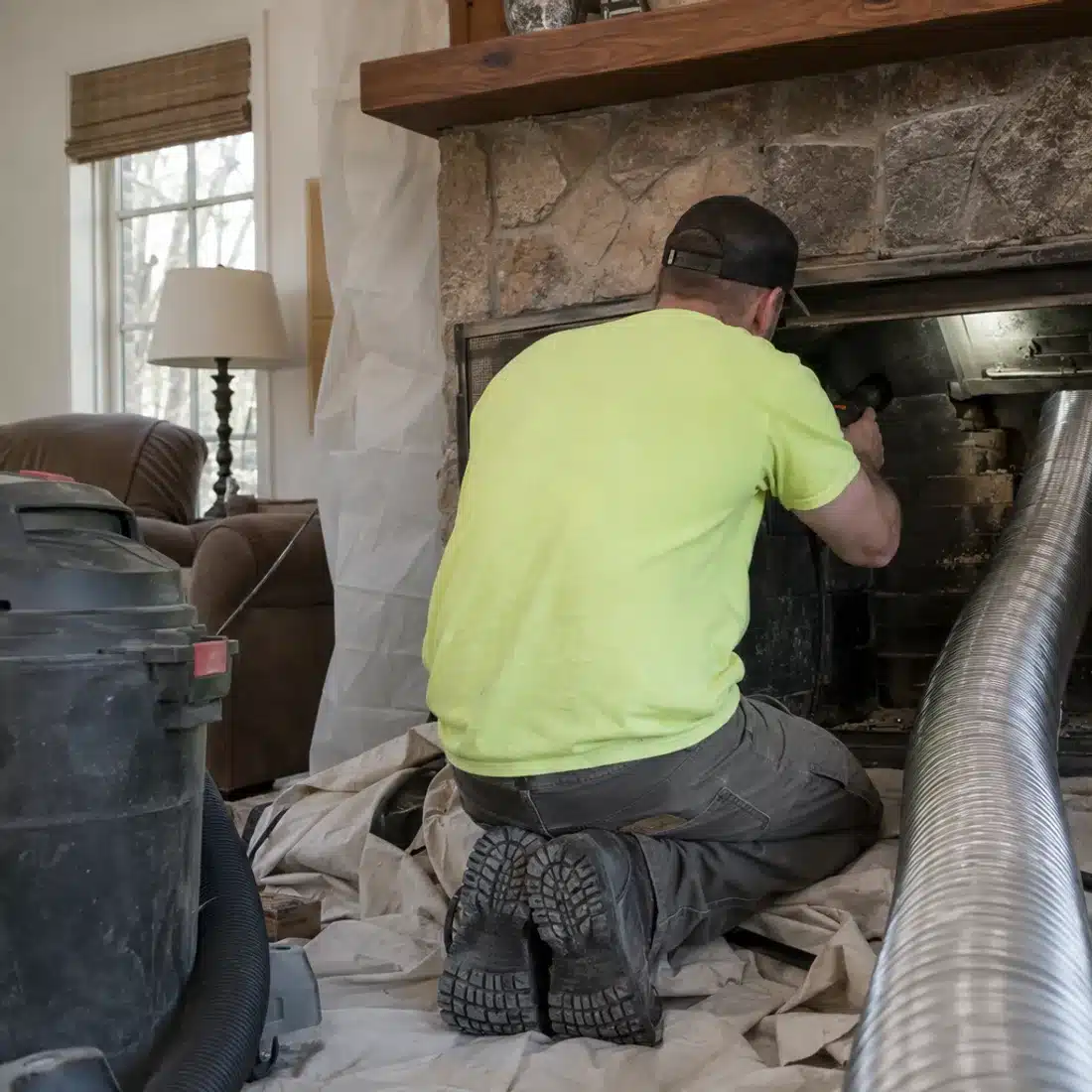
On camera, the most common problems are cracked tiles, open mortar joints between tiles, and tiles that have shifted out of line. North Texas soil movement plays a part: as foundations settle, tall masonry chimneys move slightly and old joints open up.
We also find flues that were never sized for the appliance attached to them. A wood fireplace converted to gas logs, or a new high-efficiency gas appliance, often needs a smaller dedicated liner to draft safely.
Not every flue problem needs a full reline. A single damaged section can sometimes be repaired, and a damaged clay flue at the top can sometimes be replaced. We tell you which situation you are in, with the camera footage to show why.
Gas appliances are a special case. When a furnace or water heater is replaced with a newer, more efficient model, the flue gases run cooler and wetter. In an oversized clay flue, that moisture condenses on the tiles, dissolves the mortar and can leave the flue unable to vent properly. A correctly sized gas liner solves that.
Stainless Steel Relining, Gas Liners and Flue Repair
Full stainless steel reline: a flexible or rigid stainless liner is run the full height of the chimney, connected at the bottom, and capped with a top plate and rain cap. This is the long-term fix for a cracked clay flue in a wood-burning fireplace.
Gas liner replacement: gas appliances need a liner sized to their output. Replacing an old or oversized gas liner is a smaller job and usually much less expensive than a full wood-burning reline.
Clay flue and pipe repairs: a damaged top flue tile, a disconnected pipe section or a short flue extension can often be repaired without relining the whole chimney.
Factory-built fireplaces with metal pipe are a different system. If yours has rust, separated sections or a failed pipe, see our fireplace installation and repair service.
How Chimney Liner Installation Works, Start to Finish
Camera Inspection
Every liner job starts with a camera, not a guess.
We sweep the flue if needed so the walls are clean, then run a camera from the top of the chimney to the smoke chamber. Every tile, every joint and every offset is recorded, along with the size and type of fireplace or appliance the flue serves.
You see the footage and get a written recommendation: a repair, a partial fix or a full reline, with the reason behind it.
Size and Install
The liner is sized to the appliance, never to whatever is on the truck.
For a full reline, a stainless steel liner is lowered from the roof down the existing flue, insulated where the chimney and appliance call for it, and connected at the bottom to the fireplace smoke shelf or the appliance outlet. Gas liners are sized to the burner output so the appliance drafts safely.
At the top, a top plate seals the old flue and a rain cap goes on so water and animals stay out.
Test and Document
Before we leave, the system is tested running.
We check the draft and every connection with the fireplace or appliance in use. You get photos of the finished install for your records, your insurer or a home sale.
Pricing
Chimney Liner Prices in Dallas
Gas liner replacements start at $850. A full stainless steel reline for a wood-burning fireplace typically runs $4,386 to $9,500 depending on the chimney height and flue size.
| Service | Typical price |
|---|---|
| Stainless steel chimney liner, install or replaceFull height reline | $4,386 – $9,500 |
| Gas liner replacementSized to your gas appliance | $850 |
| Clay flue replacementDamaged top flue tile | $598 |
| Pipe or flue repair and reassembly | $280 – $1,518 |
| Chimney pipe, supply and install | $780 – $4,500 |
| Chimney pipe or flue extension | $1,800 – $1,832 |
| Chimney safety inspection (structure, cap, flashing, brick and siding)Waived when you book the repair | $79 |
Your exact price is confirmed on site before any work starts. The $79 safety inspection is waived when you book the repair.
Chimney Liner Installation Questions
How much does a chimney liner cost in Dallas?
A gas liner replacement is $850. A full stainless steel reline runs $4,386 to $9,500, mostly depending on the height of the chimney and the size of the flue. We quote after a camera inspection.
Can a cracked clay flue be repaired instead of relined?
Sometimes. A single damaged top tile or a short section can be repaired. Cracks running through several tiles usually mean a reline is the safe and lasting fix.
Do I need a liner for gas logs?
Gas logs in a masonry fireplace usually vent through the existing flue, which must be in good condition. Gas appliances such as inserts or furnaces need a liner sized to their output.
Does a stainless chimney liner need insulation?
Insulation matters too. On tall exterior chimneys, an insulated liner keeps flue gases warm all the way up, which improves the draft and reduces the creosote that forms when smoke cools too quickly. We recommend insulation where the chimney and appliance call for it, and explain why when we do.
How long does a liner installation take?
Most stainless steel relines are completed in one day once the liner is on site.
Will a new liner fix smoke coming into my room?
If the cause is a damaged or wrongly sized flue, yes. Smoke problems can also come from a closed or broken damper, so we check the whole system.
Does a home inspection require a liner repair?
Inspectors often flag cracked flues. A camera inspection and written report from us tells buyers and sellers exactly what the flue needs.
What size liner do I need?
The liner is sized to the fireplace opening or the appliance's output, not the existing flue. We calculate it on site.
Are stainless liners better than clay?
For relining an existing chimney, yes. Stainless steel liners are lighter, sized exactly, and come with long manufacturer warranties.
Areas We Serve for Chimney Liner Installation
The Chimney Inspection & Sweep serves Dallas and the full DFW Metroplex for chimney liner installation.
We work across Dallas, Plano, Carrollton, Irving, McKinney, Frisco, Allen, Garland, Richardson, Addison, Arlington, and all surrounding communities. If you’re in the DFW area, we can get a crew to you.
Schedule Your Dallas Chimney Liner Inspection
Every liner job starts with a camera inspection, so you only pay for the work your flue actually needs.
Call us at 972-884-5553 or email info@theonechimneysweep.com to schedule. With 12 active crews and 24/7 availability, we can typically get to you within days, not weeks. We’ve been serving Dallas-area homeowners since 1991. You can also book online.

Chimney repair is one of our main services.
We also offer a free home fire safety check at every service appointment.
Information
Service Areas
- Dallas
- Plano
- Carrollton
- Irving
- McKinney
- Frisco
- Allen
- Garland
- Richardson
- Addison
- Arlington
© 2024 – 2025 | All Rights reserved by The Chimney Inspection & Sweep
Powered By Rank First Labs