

Dallas, TX
DIY vs Professional Pilot Light Repair: Which Makes Sense?
Your gas fireplace pilot light goes out. Before you reach for a lighter or call a technician, here is what 33 years of field work in Dallas-Fort Worth says about when each choice is the right one.
- Est. Dallas TX
- 1991
- Active Crews
- 12
- Years Operating
- 33
- Safety First
- Written inspection reports on every gas fireplace visit
The Chimney Inspection & Sweep
Dallas Fireplace Repair Since 1991
The Chimney Inspection & Sweep has been working gas fireplaces across the Dallas-Fort Worth Metroplex since 1991. That is 33 years of pilot assemblies, thermocouples, gas valves, and everything that goes wrong between them. Our 12 active crews handle everything from a simple relight to a full pilot assembly replacement.
Every gas fireplace inspection in Dallas we complete comes with a written report. Not a verbal summary. A document you can reference, file, or hand to a home buyer if you are selling.
We cover the full DFW Metroplex. Services are available in Allen, Frisco, McKinney, Irving, Carrollton, and throughout Dallas proper.
What We Cover
Pilot Light Issues We Diagnose Every Week
- Pilot won't light at all - usually a clogged orifice or failed igniter module
- Pilot lights but won't stay lit - thermocouple or thermopile failure, the most common repair we do
- Flame is weak or yellow - indicates airflow or gas pressure problems, not a cosmetic issue
- Intermittent outages - often a draft issue or a thermocouple that is failing slowly
- Pilot works but main burner won't ignite - gas valve problem, not a pilot problem
Safety Note
Carbon monoxide has no smell. A malfunctioning pilot assembly can allow unburned gas to accumulate before ignition. The U.S. Consumer Product Safety Commission reports hundreds of CO-related deaths annually from gas appliances. That is the real cost of a misdiagnosed pilot issue.
The Real Answer: It Depends on What Is Actually Wrong
Most pilot light articles say "just follow these steps." The honest answer is more complicated, and knowing the difference protects your home and your family.
What DIY Can Handle
Relighting a pilot that simply went out is the one legitimate DIY task here. If your pilot light blew out during a storm or after an extended summer shutdown, and you can clearly see and follow the manufacturer's lighting instructions printed on the appliance, relighting it yourself is reasonable.
The process is straightforward: turn the gas valve to "pilot," depress the pilot button, hold a flame to the pilot orifice, keep the button depressed for 20 to 30 seconds to heat the thermocouple, then release and turn the valve to "on." If it stays lit, you are done.
That is the full scope of safe DIY pilot work. Everything after that step requires tools, diagnostic knowledge, and gas system experience that most homeowners do not have.
DIY is reasonable only when:
- The pilot simply went out, no repeated history
- Manufacturer instructions are legible on the unit
- You smell no gas before starting
- The pilot stays lit after a single attempt
- The fireplace operates normally afterward
When You Need a Professional
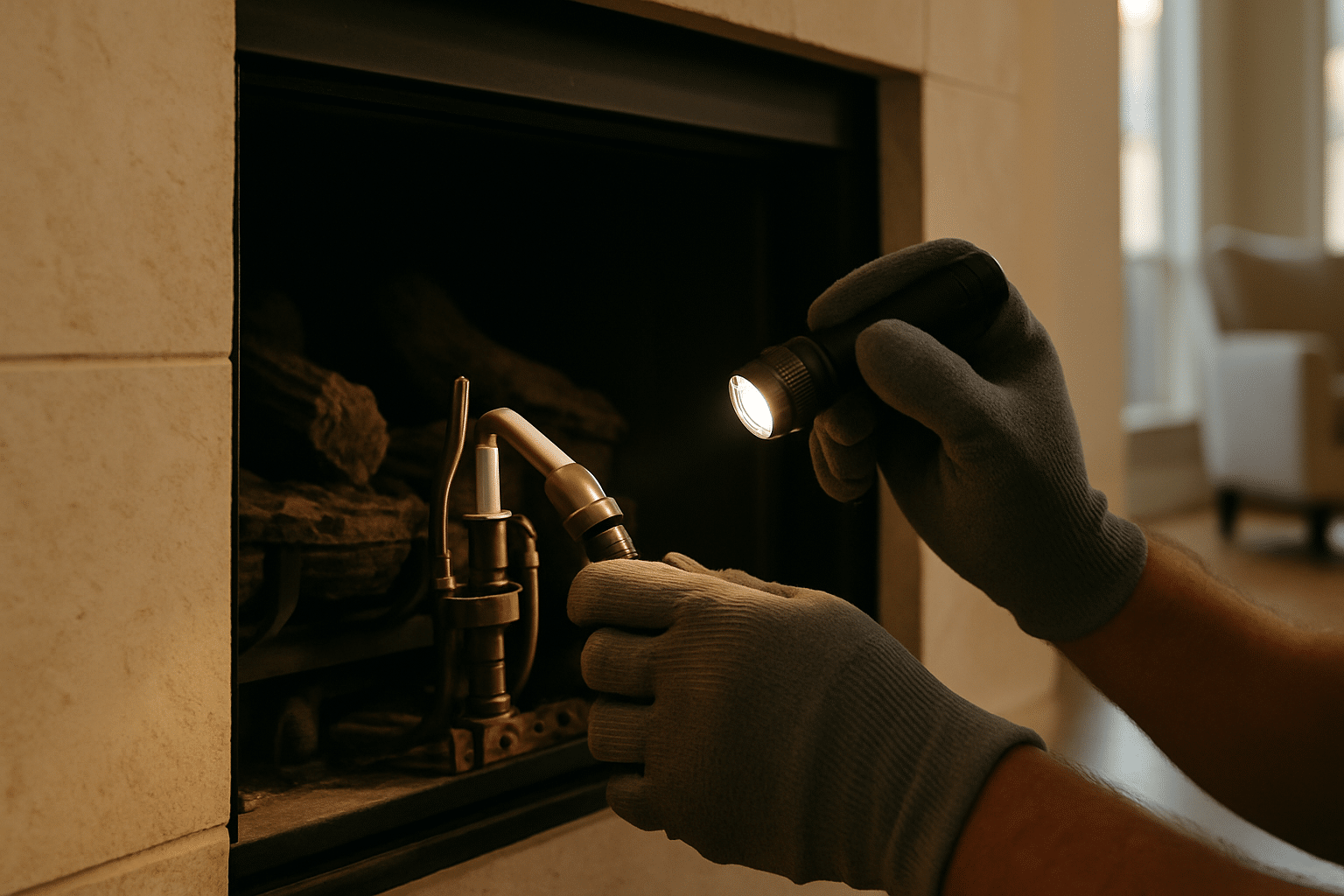
If the pilot won't stay lit after you relight it, something in the safety circuit has failed. The thermocouple is the most common culprit. It is a small metal probe that sits in the pilot flame and generates a tiny electrical current to hold the gas valve open. When it fails, the valve shuts off gas to the pilot within seconds of you releasing the button.
Replacing a thermocouple involves shutting off the gas supply, disconnecting the old unit from the gas valve, threading in a new one at the correct torque, and testing the millivolt output with a meter. An improperly installed thermocouple does not keep you safe. It gives you a false sense of security while allowing partial gas flow.
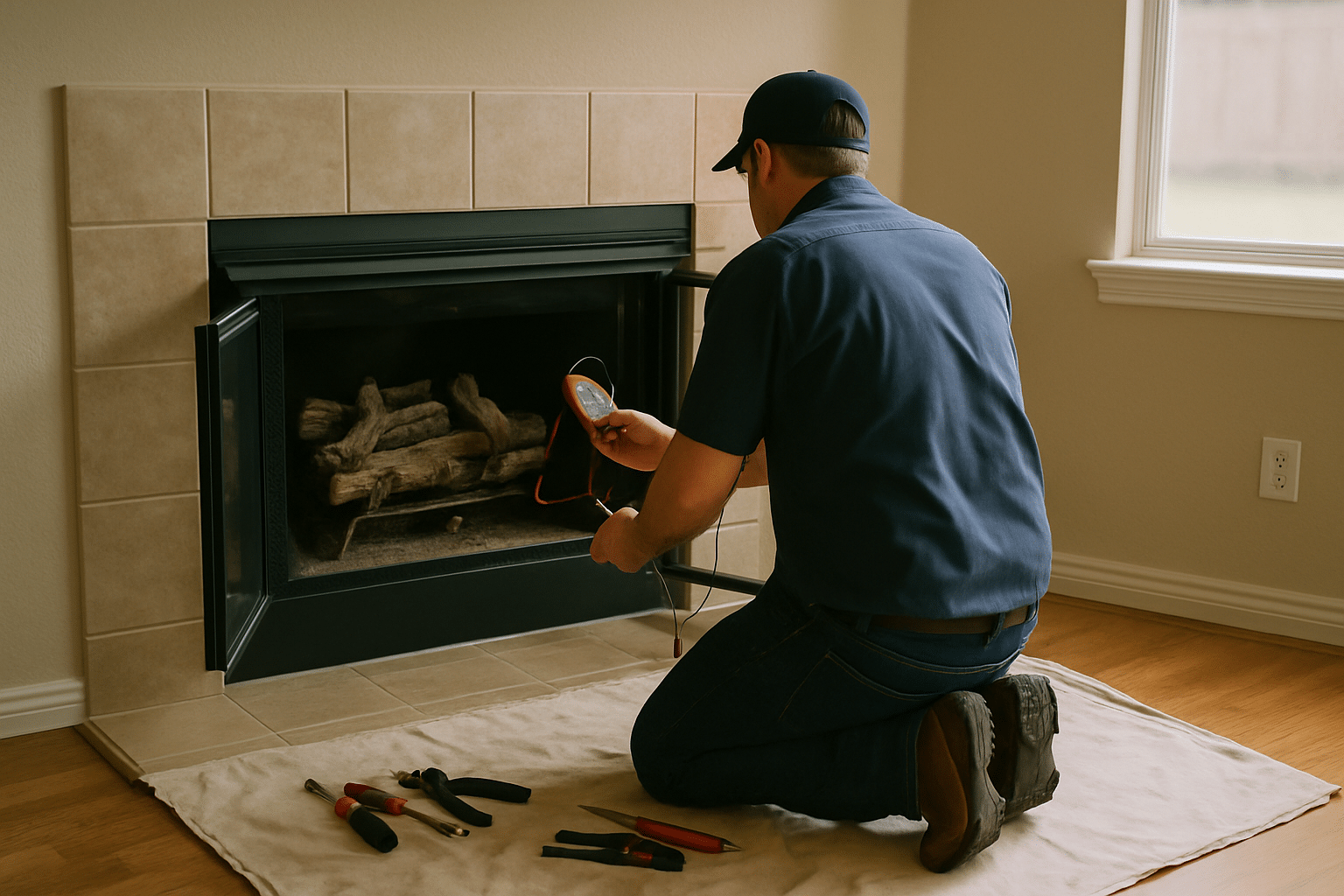
Our technicians carry a millivolt meter on every Dallas gas fireplace repair call. A healthy thermocouple reads 25 to 35 millivolts. Below 20 and the valve will not hold. That test takes 90 seconds and immediately distinguishes a thermocouple problem from a gas valve problem. Without that meter, you are guessing.
Call a professional when:
- Pilot lights but goes out when you release the button
- You smell gas at any point in the process
- This is the second or third time this season
- Pilot flame is small, yellow, or flickering
- Main burner ignites but won't stay on
- Any part of the igniter or valve assembly looks corroded
Diagnosis First
The Components Actually Involved
Understanding the parts helps you describe the problem accurately when you call us. A standard standing pilot system has four components that can fail independently.
Thermocouple
Generates millivoltage from heat. Lifespan roughly 3 to 5 years with regular use. The most common failure point in Dallas fireplaces that sit unused through summer.
Thermopile
Multiple thermocouples in series, generates more voltage. Powers remote receivers and wall switches. When thermopile output drops, the remote stops working before the pilot fails outright.
Pilot Orifice
Tiny brass fitting, often 0.008 to 0.012 inch diameter. Spider webs and dust accumulate here during long Texas summers. A clogged orifice produces a weak yellow flame that cannot heat the thermocouple sufficiently.
Gas Valve
The most expensive component, often $150 to $400 in parts alone. Requires licensed gas line work in Texas to replace. Never attempt to disassemble a gas valve yourself.
To diagnose thermocouple failure with a millivolt meter
Typical visit duration for pilot assembly diagnosis and repair
Average thermocouple lifespan in a Dallas fireplace with seasonal use
Dallas-Specific
Why Dallas Fireplaces Fail Differently
Pilot assemblies in DFW sit idle from roughly April through October. Six months of no use is hard on thermocouples. The probe tip oxidizes. The connection at the gas valve loosens slightly with thermal cycling. Spiders love the pilot orifice.
Book Fall Inspection →The "First Cold Day" Problem
We get a surge of calls every November in Dallas. Homeowners turn on their fireplace for the first time since last winter and the pilot does not light. This is predictable and preventable. A gas fireplace inspection in September or October catches a weakening thermocouple before it fails on a cold Friday night.
Spider and Insect Contamination
This is not a joke. Wolf spiders and mud daubers routinely build inside gas fireplace pilot assemblies during Texas summers. A clogged pilot orifice produces a weak, ineffective flame. The homeowner sees the flame and assumes everything is fine. The thermocouple never gets hot enough to generate sufficient voltage. Result: pilot goes out within a minute of the button being released. Cleaning the orifice with a thin wire or compressed air without proper disassembly can push debris further in. Our technicians use a pilot assembly removal tool and inspect the orifice under magnification.
Remote Control Systems Add a Layer
Many Dallas fireplaces installed in the late 1990s and 2000s have remote control pilot systems with a receiver module wired into the thermopile circuit. When the thermopile output drops, the remote stops working before anything else fails. Homeowners often assume the batteries are dead or the remote is broken, replace both, and still have a non-functioning fireplace. The actual fix is thermopile replacement, which is a two-wire connection, but requires accessing the valve assembly and verifying output with a meter.
Gas Pressure Matters Too
Natural gas pressure in residential lines in Dallas typically runs between 3.5 and 7 inches water column at the appliance. If your pilot flame has always been small, the gas pressure at the valve may be low. This is a utility or regulator issue, not a pilot assembly issue. Replacing thermocouples will not fix it. Low pressure also produces incomplete combustion, which is a CO risk. Our technicians carry a manometer to verify pressure as part of a full gas fireplace repair diagnostic.
Safety Protocol
If You Smell Gas, Stop Everything
This is the one absolute rule. If you smell gas near your fireplace before, during, or after a relight attempt, do not try again. Do not flip any electrical switches. Do not use your phone inside the house. Leave the house, leave the door open, and call your gas utility's emergency line from outside.
The National Fire Protection Association (NFPA) is unambiguous on this point. Gas accumulation plus an ignition source is not a repair scenario. It is a fire and explosion scenario. Only after the gas company has inspected and cleared the line should a technician evaluate the appliance.
Leave the home immediately. Do not operate any switches.
Call your gas utility's emergency line from outside.
After clearance, call a certified gas fireplace technician, not a general handyman.
What We Actually Do
Our Pilot Light Repair Process in Dallas
Here is the exact sequence a technician from The Chimney Inspection & Sweep follows on a pilot light repair call.
Gas Line Verification
Confirm gas is on at the main shutoff and at the appliance shutoff. Check for any odor. Test supply pressure at the valve inlet with a manometer.
Visual Pilot Assembly Inspection
Remove the access panel. Inspect the thermocouple tip for oxidation and corrosion. Check the orifice for debris. Look for cracked or kinked gas tubing.
Millivolt Output Test
Light the pilot and measure thermocouple output. Healthy range is 25 to 35 millivolts. Below 20 confirms replacement is needed. Also test thermopile if remote system is present.
Component Replacement
Replace failed components. Most thermocouples and thermopiles are stocked on our trucks. A full pilot assembly replacement takes 30 to 60 minutes on most units.
Full Operation Test
Light the main burner, verify flame pattern, check for CO at the appliance with a meter, test remote or wall switch function, and confirm thermostat operation where applicable.
Written Report
Document findings, parts replaced, and current operating condition. You receive a written report at the end of every visit. This is standard, not an add-on. See our full gas fireplace repair approach.
Honest Cost Breakdown
What Does Pilot Light Repair Cost in Dallas?
Cost varies with the actual diagnosis. A thermocouple replacement is significantly less than a gas valve replacement. We will tell you what is wrong before we start any repair.
Actual pricing varies by unit make, model, parts availability, and access difficulty. We provide a written estimate before any work begins.
The most expensive pilot light repair is the one that gets misdiagnosed. Replacing a thermocouple when the real problem is low gas pressure will leave you calling again in six weeks.
If your fireplace has other issues beyond the pilot, check our guides on identifying hidden fireplace damage and Dallas fireplace code requirements. Gas fireplace issues sometimes accompany structural problems with the firebox or refractory panel damage that should be addressed at the same visit.
Frequently Asked Questions
Common Pilot Light Questions
Can I replace a thermocouple myself?
Technically yes, the part itself is a straightforward thread-in connection. The risk is in not verifying the output afterward. An undertightened connection will read low voltage and cause the valve to cut off, but an overtightened connection can crack the brass fitting. Without a millivolt meter, you cannot confirm the repair worked before closing up the unit. If you are comfortable with gas appliances and have the test equipment, it is doable. Most homeowners find a service call is faster and more certain.
How long does a pilot light repair take?
Diagnosis takes 15 to 30 minutes. A thermocouple or thermopile replacement adds another 20 to 45 minutes. A full pilot assembly replacement runs 45 to 90 minutes. If we find a gas valve problem, that visit becomes a parts-order situation unless we have the right valve in stock, which we carry for common manufacturers. Budget 2 to 3 hours total for a complete visit including the written report.
My pilot lights but the main burner won't stay on. Different problem?
Yes, different circuit. If the pilot stays lit but the main burner shuts off after a few minutes, the issue is usually the gas valve's operator or a separate high-limit switch. Some units have a redundant safety shutoff that activates if the firebox overheats or if the valve senses a fault. This is a gas valve diagnostic, not a pilot repair. Do not attempt this yourself.
Is it normal for my pilot light to go out in summer?
Many Dallas homeowners turn the pilot off completely in summer to save gas. If you left it on and it went out on its own, that is worth investigating. A draft from the chimney or a building pressure change can extinguish a weak pilot. If your thermocouple output is marginal, a temperature change from the HVAC switching on can create enough pressure differential to blow it out. Fall inspection time.
Do you service older gas fireplaces from the 1990s?
Yes. We have been servicing those units since they were new. Many 1990s-era fireplaces use SIT, White-Rodgers, and Honeywell valve assemblies that are still available as replacement parts. Units from that era often have simpler standing pilot systems with fewer electronic components, which can actually be easier to work on. The thermocouples are standard sizes. The main challenge is finding the original manufacturer documentation, which we maintain in our records for common DFW-area fireplace brands.
Should I get an inspection after a pilot repair?
If the repair involves only thermocouple replacement and the rest of the system tested clean, a separate inspection is not required. If the repair revealed low gas pressure, a weak flame, or any CO readings above baseline, we recommend a full gas fireplace inspection to rule out other issues. Also see our fireplace safety guidelines for year-round maintenance habits. The CDC's carbon monoxide resources are also worth reading for any household with a gas appliance.
In Business Since 1991
Pilot Light Not Cooperating? We Have 12 Crews Ready in Dallas-Fort Worth.
Do not spend your evening holding a lighter to a pilot orifice and guessing. Our technicians diagnose the actual problem, fix it with the right parts, and hand you a written report before they leave. That is how we have operated since 1991.
Written Inspection Reports
Every gas fireplace visit includes a written report. File it for your records or your home sale. No verbal-only summaries.
12 Active Crews Across DFW
Serving Dallas, Allen, Frisco, McKinney, Irving, Carrollton, and surrounding communities. Same crews, consistent work quality.
Diagnosis Before Any Repair
We test before we replace. Millivolt meter, manometer, CO meter. You get a diagnosis, then an estimate, then a decision. No surprise charges.
Gas Fireplace Specialists, Not Generalists
This is what we do. Not plumbing. Not HVAC. Chimneys and gas fireplaces in Dallas-Fort Worth, since 1991. See our full fireplace repairman services.
© 2026 The Chimney Inspection & Sweep. Dallas-Fort Worth, TX. In business since 1991.