

Dallas, TX
DIY vs Professional Refractory Panel Replacement
Refractory panels protect the steel firebox shell from direct flame contact. When they crack beyond surface checks, replacement becomes a fire hazard question, not a renovation decision.
Founded in 1991. 33 years serving Dallas-Fort Worth. 12 active crews ready to inspect and replace.
- Founded
- 1991
- Years Active
- 33
- Active Crews
- 12
About The Chimney Inspection & Sweep
Dallas-Fort Worth's Fireplace Authority Since 1991
The Chimney Inspection & Sweep has been operating in the Dallas-Fort Worth Metroplex since 1991. That's 33 consecutive years of fireplace inspections, chimney sweeps, and panel replacements in this specific climate. North Texas weather puts real stress on fireplace components: wide temperature swings, hot dry summers, and occasional ice events all accelerate mortar and refractory deterioration.
With 12 active crews covering the Metroplex, we handle everything from routine chimney sweep services in Dallas to full refractory panel replacement and gas fireplace diagnostics. Every inspection produces a written report, not a verbal summary you might misremember.
Our HEPA containment sweeping keeps your living space clean during service. Soot and creosote don't belong in your home's air. We use rotary brush systems and sealed containment to make sure they stay in the flue where they started.
Written Inspection Reports
Every visit produces a documented report you can use for insurance, real estate transactions, or your own records. Verbal-only assessments leave you with nothing to stand on if a dispute arises.
HEPA Containment Sweeping
We use sealed rotary brush systems and HEPA filtration. Creosote and soot particles stay contained, not distributed through your home's air or settled on your furniture.
DFW Climate Expertise
Dallas temperature swings from the 100s in summer to freezing in winter accelerate refractory cracking and mortar deterioration faster than in more temperate climates. We know what to look for locally.
12 Active Crews
Covering Allen, Frisco, and the broader Metroplex. Scheduling is realistic, not weeks out. Allen TX fireplace services and Frisco chimney services are both covered.
The Real Question
What Are Refractory Panels And Why Do They Fail?
Refractory panels line the interior walls of a prefabricated wood-burning fireplace. They're cast from a heat-resistant material similar to firebrick, and their job is to absorb and reflect heat while protecting the steel firebox shell behind them. Without intact panels, repeated fires will eventually warp or burn through that steel.
Hairline surface cracks are normal and expected after years of thermal cycling. The concern is deeper cracks, chunks missing from panel edges, or sections where you can see the fiberglass insulation or steel behind the panel. At that point, continued use is a structural fire risk.
Dallas fireplaces see concentrated use from October through March. Panels in homes that run the fireplace regularly often show meaningful wear within 10 to 15 years. Homes in areas with harder water and high mineral content in the air can see faster surface degradation. Understanding fireplace code in Dallas, Texas matters here too, since damaged refractory panels can affect code compliance on a home sale.
The DIY Case: When Homeowners Try It
Replacement panels for common prefabricated fireplace brands like Heatilator, Majestic, and Heat & Glo are sold at fireplace specialty stores and some online retailers. The panels themselves are manufacturer-specific, meaning a Majestic panel doesn't fit a Heatilator box. This is where most DIY attempts fail first.
If you can identify your fireplace's exact make, model, and manufacture year (usually on a metal data plate inside the firebox), ordering the right panels is possible. Installation involves removing the old panels, cleaning the firebox floor of debris, and setting the new panels according to the manufacturer's diagram. Some units use clips; others rely on gravity and the fit of adjacent panels.
The physical task isn't beyond a careful, detail-oriented homeowner who is comfortable working in a confined, dirty space. The bigger issues are:
- Diagnosis accuracy: If you replace panels without checking why they cracked, the same issue may destroy the new panels. A firestop obstruction, an oversized fire, or a problem with the damper can accelerate panel wear.
- Panel sourcing: Discontinued models are a real problem. Many DFW homes have fireplaces from the 1980s and 1990s where original panels are no longer manufactured. Third-party panels may not meet original tolerances.
- Hidden damage: Cracked panels sometimes indicate heat transfer to areas you can't see without pulling the firebox apart. A homeowner replacing only what's visible may miss a compromised firebox shell.
- No documentation: A DIY repair leaves no inspection record. If you sell the home, a buyer's inspector will note the fireplace condition. Without a professional sign-off, you may face delayed closings or repair credits.
The Chimney Safety Institute of America (CSIA) and the National Fire Protection Association (NFPA) both recommend annual professional inspections for wood-burning fireplaces. Neither organization recommends homeowner self-repair of refractory components without professional assessment.
What We See When DIY Goes Wrong
Wrong panel ordered: A homeowner installs panels that are 1/4 inch thinner than spec. The fit looks fine, but over time the thermal gap causes uneven heat distribution and the new panels crack faster than the originals.
Missed steel damage: Panels replaced, but the back wall of the firebox shows burn-through. We've seen this in older homes where owners replaced panels twice without realizing the box itself needed replacement.
Gas fireplace confusion: Refractory panels in gas fireplaces are a different specification. Applying wood-burning fireplace panels to a gas unit creates a clearance problem and a potential gas fireplace safety issue that isn't visible from the outside.
The Professional Process
What a Professional Panel Replacement Actually Looks Like
A professional refractory panel replacement visit typically runs 2 to 4 hours depending on panel configuration, firebox access, and whether additional repairs are needed. Here's what the process looks like from our end.
Pre-Work Inspection
Before any panels come out, we inspect the full firebox: steel shell condition, damper operation, smoke shelf, and the flue above. Replacing panels into a damaged firebox is a short-term fix. We identify the full scope before any work starts.
Manufacturer Verification
We locate the data plate and confirm exact make, model, and series. This determines which panels ship from which source. For discontinued models, we source OEM or verified-equivalent replacements and document the substitution in your report.
Panel Removal and Debris Clearance
Old panels come out in pieces or whole depending on condition. The firebox floor is cleared of ash and debris. We check the floor for warping or burn damage that would affect how new panels seat.
Panel Installation
Panels are set per manufacturer sequence, which varies by unit. Some configurations require setting side panels before the back, others lock in differently. Incorrect sequence means panels won't fit correctly and can shift during use.
Post-Installation Check
We verify panel fit, confirm no gaps at panel junctions, check damper clearance, and test the firebox for draw before leaving. If a gas fireplace is involved, we check the gas components and connections as part of the same visit.
Written Report
Every replacement gets a written report documenting the panels replaced, the model verification, any additional findings, and the completed work. This is the record you'll need for a home sale, insurance claim, or future service visit.
Cost Considerations
What Does Refractory Panel Replacement Cost in Dallas?
Panel costs vary with fireplace model and whether the original manufacturer still produces them. Common panel sets for current production units generally run $150 to $400 for the panels themselves, before labor. Discontinued or hard-to-source panels can run higher. Labor for a standard replacement visit in the Dallas market runs 2 to 4 hours. Total professional service cost varies with unit complexity and any additional findings, but a basic panel replacement by a qualified service company is typically less than replacing a damaged firebox or dealing with a structure fire claim.
The DIY cost is primarily the panels themselves, plus any tools you don't already own. The hidden cost is misdiagnosis: if you replace panels without finding the root cause, you may be back in the same position in two or three seasons. We see this pattern regularly, particularly in older DFW homes where the fireplaces have been in service for 20-plus years.
The math usually favors professional service when the home is occupied and in active use. Vacation homes or properties where the fireplace hasn't been used in years are sometimes different situations, and we'll tell you that honestly on a pre-repair inspection.
For standard, currently produced models. Hard-to-source or discontinued units can run higher. Not including labor or additional repair findings.
For a standard refractory panel replacement visit, including pre-work inspection, panel removal, installation, and post-check. Complex units or additional findings extend this.
For actively used fireplaces in the DFW climate. Occasional use extends this. Panels in homes with oversized fires or restricted dampers fail faster regardless of age.
Inspection Types
Which Inspection Level Do You Need?
Not every refractory issue requires the same level of inspection. NFPA 211 defines three inspection levels, and the right one depends on your situation.
Level 1 Inspection
For fireplaces in continuous, unchanged use with no known problems. Covers accessible components including the firebox interior and refractory panels. Recommended annually. This is the starting point for most panel crack assessments.
Level 2 Inspection
Required when you're selling or buying a home, after a chimney fire, or when making changes to the system (like switching fuel type). Includes video scanning of the flue and a more detailed firebox assessment. This is standard for real estate transactions in Dallas.
Level 3 Inspection
For suspected serious structural damage, typically after a significant chimney fire or major event. May involve removing components to access hidden areas. Not common for routine refractory panel issues.
Panel Crack Assessment
How to Assess Your Panels Before Calling
You don't need professional tools to do a basic visual check. Here's what to look at, and what it means.
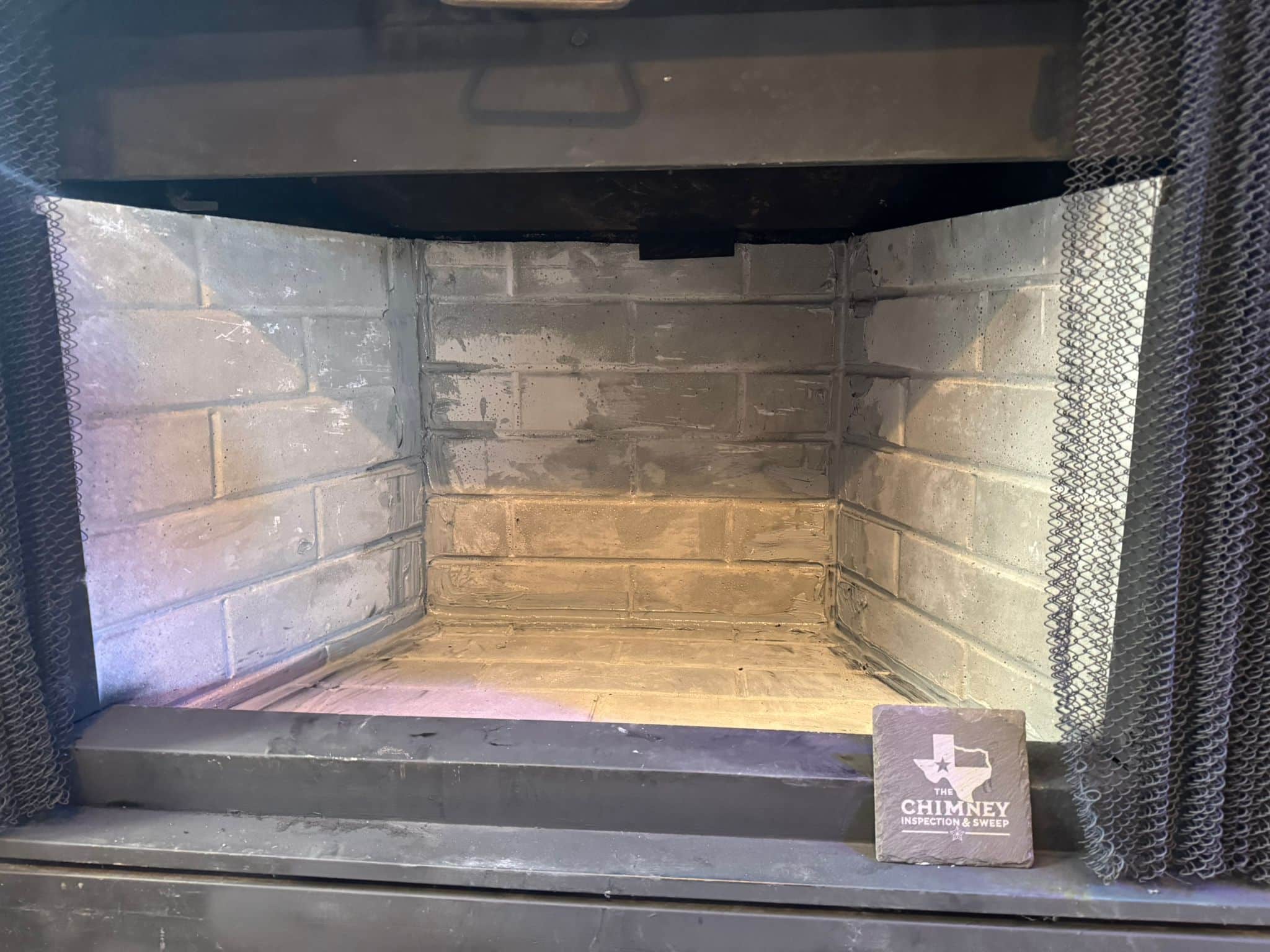
Use a flashlight and look at each panel face-on from the firebox opening. Run a coin along any visible crack. If the coin drops into the crack past the surface, the crack has depth. Surface crazing that doesn't penetrate is typically cosmetic.
Fine surface crazing - normal thermal stress, no immediate action required, but note for next annual inspection.
Single crack running panel edge to edge - schedule inspection before next use. This can worsen rapidly with heat cycling.
Missing chunks or exposed backing material - do not use the fireplace. Schedule replacement before the next fire.
Black discoloration on exterior firebox wall (outside the firebox) - stop use immediately and call for inspection. This suggests heat is transferring outside the firebox boundary.
Gas Fireplaces
Gas Fireplace Refractory Panels: A Different Situation
Gas fireplaces also use refractory panels, but the failure modes and replacement considerations differ from wood-burning units. Gas burners run at more consistent temperatures and don't produce the same creosote deposits, but the panels still crack from thermal cycling over time.
The bigger concern with gas units is not the panels alone but what's adjacent to them. Gas logs, burner pans, and pilot assemblies are all in close proximity to the panel surfaces. A DIY panel replacement on a gas unit that shifts a log set out of position or disturbs the burner pan can create a carbon monoxide risk that isn't obvious until the unit is running.
If you're looking at gas fireplace inspection in Dallas, we document the full system including panel condition, burner position, and CO considerations. A pilot assembly replacement is sometimes needed alongside panel work on older gas units.
Gas fireplace panel specs are unit-specific and often not cross-compatible with other brands. The data plate is essential for sourcing the right parts. On units manufactured before 2000, parts availability is inconsistent, and a full firebox assessment may be worth more than tracking down original panels for a 25-year-old unit.
Gas Fireplace Panel Warning Signs
- Yellow or orange flame color where it contacts the panels (should be blue for gas)
- Visible cracks running through panel behind gas log set
- Sooting on panel surface above the burner
- Any change in flame pattern after panel movement during cleaning
Additional Services
Other Fireplace and Chimney Services We Cover
Refractory panel replacement is one part of fireplace maintenance. These are the other services we handle across Dallas-Fort Worth.
Chimney Sweeping
Rotary brush systems and HEPA containment. Recommended annually for wood-burning fireplaces, or after every cord of wood burned in high-use situations.
Dallas Chimney SweepLevel 1 / 2 / 3 Inspections
Written reports for annual maintenance, real estate transactions, and post-incident assessments. Level 2 is required for most home sales in Texas.
Dallas Fireplace CodeGas Fireplace Inspection
CO safety check, burner assessment, pilot assembly verification, and panel condition review. Documented and reported.
Gas Inspection DallasGas Fireplace Repair
Igniter failures, valve issues, thermocouple and thermopile replacement, and burner service for DFW gas units.
Gas Repair DallasPilot Assembly Replacement
For gas units with intermittent ignition failures. Often paired with panel work on older fireplaces during a single service visit.
Pilot Assembly ServicePanel Installation Service
Full replacement of refractory panel sets with documented model verification, proper sequencing, and post-installation report.
Panel InstallationFrequently Asked Questions
Questions About Refractory Panel Replacement
Can I use my fireplace with cracked refractory panels?
It depends on the severity. Surface crazing is generally not a stop-use situation. A full-length crack running edge to edge is a stop-use situation until inspected. Missing material or visible backing behind the panel is a definite stop-use. When in doubt, don't light a fire until a professional has seen it.
How long do new refractory panels last?
In active DFW use, 10 to 15 years is a reasonable range. Panels in vacation homes or lightly used fireplaces can last significantly longer. The main variables are fire size (larger fires stress panels more), damper operation, and whether the root cause of previous failure was addressed before new panels were installed.
My fireplace brand was discontinued. Can panels still be replaced?
Sometimes. Some manufacturers produced panels with common dimensions that are available from third-party suppliers. Others are proprietary enough that an exact replacement is no longer possible, in which case a complete firebox replacement becomes the discussion. We document which situation applies and what your options are in the written report.
Do I need an inspection before panel replacement, or can you just replace them?
The inspection happens first, as part of the same visit. We don't install panels into an uninspected firebox. Finding out the steel shell is compromised after new panels are installed is a problem for everyone. The pre-work assessment adds time but saves a repeat service call.
Will panel replacement affect my home's resale inspection?
A professional replacement with written documentation helps. A DIY replacement without records typically raises questions from a buyer's inspector. Real estate transactions in Dallas frequently include Level 2 chimney inspections. Having service records from a qualified company makes that process straightforward.
How far in advance should I schedule panel replacement before winter?
August and September are the practical answer for DFW. By October, scheduling fills up as homeowners realize the fireplace needs work before the first cold front. If panels need sourcing for a discontinued unit, add 1 to 3 weeks for parts delivery on top of the service scheduling window.
Related Resources
More From The Chimney Inspection & Sweep
Schedule Service
Cracked Panels. One Call. Written Report.
We've been doing this since 1991. Twelve active crews cover Dallas-Fort Worth. A panel inspection and replacement is a single visit with a documented outcome, not a guessing game. Schedule before the October backlog hits.
Years in Dallas-Fort Worth
Operating continuously since 1991. We've seen every fireplace model, every failure mode, and every Dallas climate cycle. That history informs every job we take.
Active Crews Metroplex-Wide
Covering Allen, Frisco, Irving, Plano, McKinney, and across DFW. More crews means realistic scheduling, not 3-week waits when the cold front arrives.
Every Job Gets a Written Report
Not a verbal summary, not a text message. A documented report with findings, work completed, and panel identification. Useful for insurance, real estate, and future service visits.
Dallas, Allen, Frisco, Plano, McKinney, Irving, Garland, Mesquite, Carrollton, and surrounding areas.
© 2026 The Chimney Inspection & Sweep. Dallas-Fort Worth Metroplex. Founded 1991.
References: Chimney Safety Institute of America | National Fire Protection Association