Pilot assembly replacement Dallas: Your Top Questions Answered
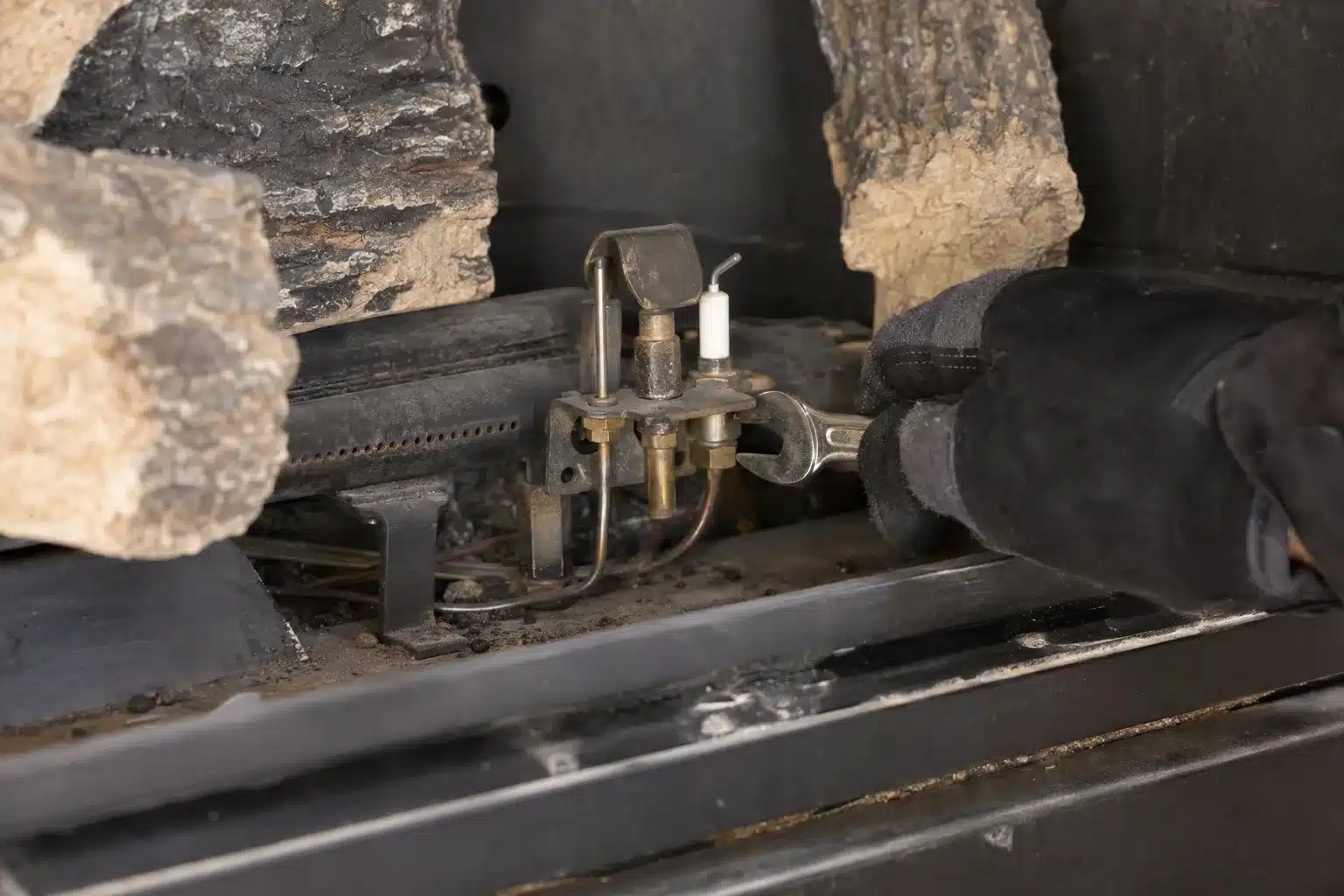
Close-up view inside an open gas fireplace firebox showing a pilot assembly, pilot hood, thermocouple rod, and igniter electrode, mounted on the burner rail, with a gloved hand holding a wrench nearby

Dallas, TX ● Gas Fireplace Specialists ● Since 1991

Pilot Assembly Replacement Dallas: Your Top Questions Answered

The pilot assembly is the ignition core of your gas fireplace. When it fails, your fireplace goes cold and carbon monoxide risks rise. Here is what Dallas homeowners need to know, from diagnosis through final safety check.

33Years Operating
12Active Crews
1991Founded
✓
Written Safety ReportEvery service visit

The Chimney Inspection & Sweep

What Is a Pilot Assembly, and Why Does Replacement Matter?

The pilot assembly is a bundle of three components working together: the thermocouple or thermopile (a heat-sensing safety valve), the pilot burner itself, and the igniter. If any one part degrades, the whole assembly typically needs to go.

On a standing pilot system, a small flame burns continuously. The thermocouple sits in that flame. If the flame dies, the thermocouple cools, and the gas valve shuts automatically as a safety measure. That is the system working as designed. But when the thermocouple wears out, the valve cannot read the signal correctly and shuts gas off even when the pilot is lit.

Intermittent pilot systems (IPI) are more common in fireplaces installed after 2010. They only spark on demand. A failing IPI module shows up as repeated clicking without ignition, or a pilot that lights but cannot sustain a flame long enough to open the main burner.

Carbon monoxide is the serious concern. A partially functional pilot assembly can allow unburned gas to accumulate near the firebox before igniting. The U.S. Consumer Product Safety Commission lists CO poisoning from gas appliances as a preventable but recurring cause of household deaths. Do not operate a gas fireplace with known ignition problems until a technician inspects it.

We have been diagnosing pilot assembly failures in Dallas-Fort Worth homes since 1991. In 33 years and across 12 active crews, the pattern is consistent: most homeowners wait too long because the fireplace "still sort of works." Do not wait for a complete failure.


Learn more about Full Two-Piece Chimney Flashing System Repaired in One Dallas Visit →

● Standing Pilot

Burns continuously. Thermocouple-based safety shutoff. Common in pre-2010 gas fireplaces.

◆ Intermittent Pilot

Sparks on demand. IPI module controls ignition sequence. Standard in modern gas inserts.

The Complete Process

How Pilot Assembly Replacement Works in Dallas

A proper replacement is not just swapping parts. The work sequence matters for safety and long-term reliability.

01

Diagnosis Before Ordering Parts

We test the thermocouple millivolt output with a multimeter before pulling any parts. A healthy thermocouple reads 25-35 millivolts. Anything below 20mV means it cannot hold the gas valve open reliably. This step prevents replacing components unnecessarily.

02

Assembly Removal and Inspection

The gas supply line is shut off at the valve. The pilot tube, thermocouple lead, and igniter wire are disconnected. While the assembly is out, we inspect the burner orifice for corrosion and the firebox for any signs of heat damage or debris that should be addressed before reassembly.

03

Calibration and Safety Verification

After the new assembly is seated and all connections are leak-tested with soapy solution, we measure the new thermocouple output, confirm pilot flame geometry (it must fully envelope the thermocouple tip), and operate the main burner through three full cycles. The visit ends with a written report.

Common Questions

FAQ: Pilot Assembly Replacement in Dallas

How long does a replacement take?

Most jobs run 1.5 to 2.5 hours. If the original manufacturer's assembly is discontinued (common on units 15 or more years old), sourcing a compatible retrofit kit can add a few days before we schedule the return visit.

Can I replace the pilot assembly myself?

The mechanical part is not complex, but working on gas connections requires leak-testing every joint, and Dallas City Code requires permitted gas work to be performed or supervised by a licensed contractor. See our detailed breakdown of DIY vs professional pilot light repair in Dallas for a realistic look at the trade-offs.

Does replacing the pilot assembly require a permit?

In most Dallas-Fort Worth jurisdictions, replacing a like-for-like component on an existing appliance does not require a separate permit, but any modification to the gas line itself does. We evaluate each job site and advise before starting work. For a broader look at local rules, see fireplace code requirements in Dallas, Texas.

What if the gas valve is also faulty?

A weak thermocouple will sometimes cause a healthy gas valve to shut prematurely, mimicking a valve failure. We always test the thermocouple first. If millivolt output is good but the valve still will not stay open, the valve seat is usually the culprit. We document findings and quote valve replacement separately before proceeding.

How do I know if my system uses a thermocouple or thermopile?

A thermocouple has a single wire and generates roughly 25-35 millivolts. A thermopile is a larger sensor with two wires and generates 300-750 millivolts, enough to power a wall switch or remote receiver. The distinction matters because they are not interchangeable. If you want to add remote control capability, see our page on pilot light remote control options.

My pilot works but the fireplace still will not stay on. Is that the pilot assembly?

Not necessarily. A pilot that lights but a main burner that goes out after a few minutes often points to a faulty ODS (oxygen depletion sensor) or a blocked burner orifice. We inspect the full ignition circuit, not just the pilot tube, as part of any diagnostic visit.

Component Wear

Parts Lifespan and Replacement Intervals

Thermocouple3-7 years typical

Degrades faster in Dallas homes with high seasonal use variation. Humidity from summer to dry-cold winters stresses the metal junction.

Thermopile5-10 years typical

Output drops gradually. Many homeowners first notice remote control inconsistency before the fireplace stops working entirely.

Spark Igniter5-12 years typical

Electrode tip erodes with use. Weak spark is usually the first sign, often confused with battery failure on battery-powered systems.

Pilot Burner Orifice10-20 years typical

Corrodes slowly. A partially blocked orifice shrinks the pilot flame below the thermocouple tip, triggering nuisance shutoffs.

Local specifics that matter

DFW Climate and Pilot Assembly Wear

Dallas homeowners use their gas fireplaces differently than homeowners in colder climates. In DFW, the heating season is short but intense. A fireplace might go completely unused from March through October, then run daily through November and December. That on-off cycle is harder on pilot assemblies than consistent seasonal use.

Standing pilot systems that burn continuously avoid the cold-start stress, but they accumulate more orifice deposits from the ambient humidity typical of Dallas summers. If you shut off the standing pilot in spring (as many utility companies recommend to save gas), relight it carefully in fall and watch for the warning signs listed above before running the main burner.

For IPI systems, the long dormancy period between fireplace seasons means the spark electrode gap may have corroded closed or widened beyond spec. We see this regularly on pre-season inspection calls in October and November. The National Fire Protection Association recommends annual inspection of gas appliances regardless of apparent operation. That annual check is the right time to measure thermocouple output before it causes a problem mid-winter.

Also worth noting: DFW homes built in the 1990s and early 2000s commonly have natural gas fireplaces from manufacturers that have since been acquired or discontinued. Parts availability for those units is shrinking. When we encounter a unit that is 20-plus years old with a failing pilot assembly, we discuss retrofit compatibility options honestly, including whether replacement of the entire insert is the more cost-effective path.

What a Complete Inspection Covers Alongside Pilot Work

When we are already inside the firebox for pilot assembly work, a full gas fireplace inspection in Dallas adds minimal time and covers:

  • Burner ports for blockage or rust
  • Venting connections and flue termination for obstructions
  • Glass gasket seal condition (a failed gasket can cause CO infiltration into living space)
  • Refractory panels for cracks that expose the firebox shell
  • Gas valve operation and main burner flame pattern
  • CO reading at the firebox opening during operation

All findings go into a written report with pass, flag, or fail status on each item. No verbal-only summaries.

The Difference Between Pilot Assembly Replacement and Full Pilot Light Installation

Replacement means the existing pilot assembly framework stays and we substitute failed components within it. The gas valve, manifold, and burner body remain in place. This is the right approach when the unit is structurally sound and the failure is isolated to the thermocouple, igniter, or pilot tube.

Replacement is faster and typically less expensive because no new gas connections are required. Most replacement visits are complete in a single trip.

Full installation is required when a unit is being converted from decorative to functional, when the entire ignition system has been removed, or when upgrading from a manual match-lit system to a standing or electronic pilot. See our pilot light installation services for that scope of work.

Installation jobs involve running new gas lines to the pilot feed, setting manifold pressure, and often require coordination with the local gas utility for a post-work meter check.

Industry Standard

Industry standard reference: Chimney Safety Institute of America (CSIA) guidelines on gas appliance inspection frequency and CO safety protocols.

Ready to Fix It Right

Get Your Gas Fireplace Working Safely Again

We have diagnosed and repaired pilot assembly failures across Dallas-Fort Worth since 1991. Our 12 crews carry common replacement parts on every service vehicle, which means most jobs are completed on the first visit.

Every service call ends with a written report documenting what was found, what was replaced, measured output readings from the new components, and any additional items that need monitoring. You leave with documentation, not just a working fireplace.

  • 1

    Diagnostic Millivolt Testing

    We measure thermocouple output before touching parts. Numbers guide the repair, not assumptions.

  • 2

    Gas-Safe Component Swap

    All connections are leak-tested with soapy solution after reassembly. No exceptions, regardless of job size.

  • 3

    Three-Cycle Burn Verification

    We operate the main burner through three complete on-off cycles before leaving. Problems surface here, not at 2am on a cold night.

  • 4

    Written Inspection Report

    Every visit produces a documented report. Useful for home resale, insurance, or simply knowing the condition of what you own.

1991Year Founded
33Years of Experience
12Active Crews
DFWMetro Service Area

Also Serving Across the Metroplex

Our 12 crews cover the full Dallas-Fort Worth area, including specialized service in communities across the region. If your address is in the metro, we can reach you.

A plain white service van parked in the driveway of a single-story brick ranch house on a sunny suburban Dallas street with a clear sky and sparse live oak trees

© 2026 The Chimney Inspection & Sweep. Dallas-Fort Worth Metroplex. Founded 1991.

Our mission is to save lives by providing superior service at reasonable prices.
Chimney repair is one of our main services.
We also offer a free home fire safety check at every service appointment.

Service Areas

Contact Us

17630 Davenport Rd Ste 108, Dallas, TX 75252

© 2024 – 2025 | All Rights reserved by The Chimney Inspection & Sweep