
Gas Fireplace Won't Turn On in Winter: What to Do Right Now.
If your gas fireplace won't turn on in winter, start with the five-minute safety checklist below before calling anyone. Most no-start conditions have a specific cause. This page tells you what it is, what a service visit covers, and how to reach our crews.
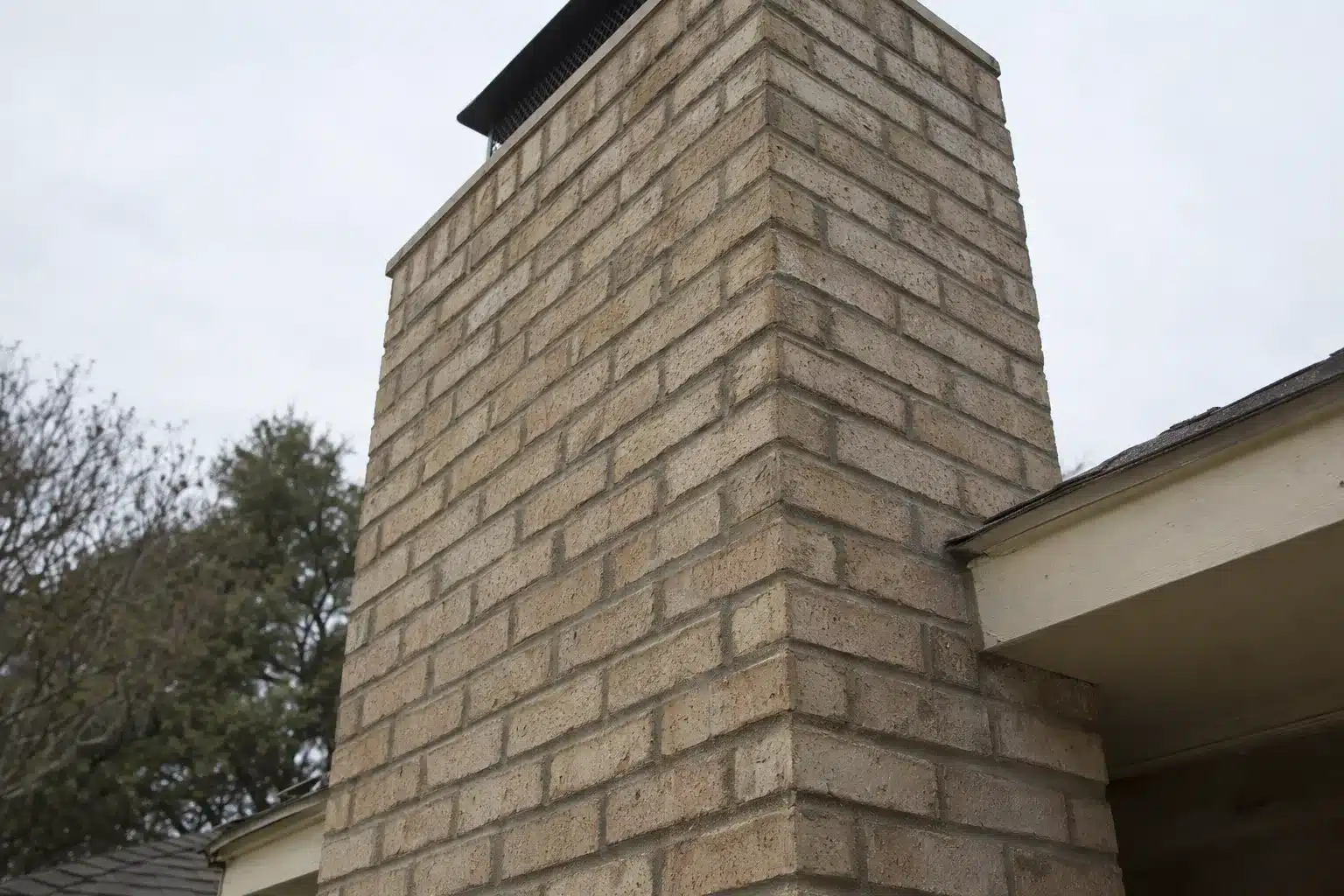
A Gas Fireplace That Won't Start Is a Diagnostic Problem. Here Is How We Approach It.
A no-start condition is never just one thing. The igniter, thermocouple, thermopile, gas valve, remote receiver, or the wall switch wiring can each produce identical symptoms. Guessing costs time and money. Systematic diagnosis does not.
Founded in 1991, The Chimney Inspection & Sweep runs 12 active crews across the Dallas-Fort Worth Metroplex. We have been diagnosing gas fireplace failures in Dallas for over 33 years. Every service visit produces a written inspection report documenting what was found, what was repaired, and what still needs attention.
When a technician arrives for a gas fireplace no-start call, the diagnostic follows a structured sequence: gas supply confirmation, pilot assembly inspection, igniter spark test, thermocouple millivolt output measurement, thermopile output check, valve coil resistance test, and receiver or wall switch verification. That sequence does not change based on what the homeowner suspects.
We also check the venting path and firebox interior during the same visit. A partially blocked flue or debris on the burner can cause intermittent ignition failures that look like an igniter problem but are actually a draft or gas-flow issue.
What to Check in the Next Five Minutes Before Calling a Technician
Work through this list in order. If you smell gas at any point, stop immediately, leave the house, and call your gas utility from outside. Do not operate any switches or flames.
Step 1
Gas supply
Confirm Gas Is On
Check the dedicated shut-off valve behind or below the fireplace. It is usually a quarter-turn ball valve on the gas line feeding the unit. If the handle is perpendicular to the pipe, the valve is closed. Turn it parallel to the pipe to open it. Also confirm other gas appliances in the home are working - if your water heater and range are also out, the issue is upstream at the meter or utility.
- Shut-off valve parallel to pipe = open
- No gas smell present
- Other gas appliances functioning
Step 2
Pilot and igniter
Check the Pilot Light
On standing-pilot systems, the pilot may have gone out. This is the single most common reason a gas fireplace won't turn on in winter, particularly after a period of non-use. Locate the pilot assembly in the lower firebox area. If no flame is visible, follow the manufacturer's relight sequence printed on the unit's label - typically: set knob to PILOT, press and hold, press the igniter, hold for 30 seconds after flame appears, then release. If the pilot won't stay lit after three attempts, the thermocouple is likely the problem. Stop and call a technician.
- Pilot flame visible and blue
- Thermocouple tip seated in flame
- Pilot holds after 30-second hold
Step 3
Controls and power
Check the Remote, Switch, and Batteries
Electronic ignition systems and remote-controlled units depend on batteries and receivers. Replace the batteries in the remote and in the wall switch receiver before assuming the igniter or valve has failed. If the unit uses a wall switch, confirm the switch is functional with a multimeter or by swapping it for a known-good switch. Receiver modules are a frequent failure point in units over five years old and are often misdiagnosed as valve failures. See our detailed walkthrough at How to Repair Gas Fireplaces Like the Pros.
- Fresh batteries in remote and receiver
- Wall switch tested
- IPI module reset attempted
When to Stop and Call a Technician
- 01You smell gas.
Any gas odor at or near the fireplace is a stop condition. Leave the house, do not operate switches, and call your gas utility's emergency line from outside. Do not return until cleared by the utility.
- 02The pilot won't stay lit after three attempts.
A thermocouple that won't hold the pilot open is generating less than the 25-30 millivolts required to keep the safety valve open. That is a component replacement, not a relight procedure.
- 03The igniter sparks but no flame appears.
If you hear clicking and see spark but gas is confirmed on, the issue is likely at the valve or the igniter electrode gap. Both require a technician with a gas pressure gauge and multimeter.
- 04The unit starts but shuts off within seconds.
This is a thermopile output problem in most cases. The thermopile must generate 300-750 millivolts to hold the main valve open. Below that threshold, the valve closes as a safety measure. Thermopile replacement is a straightforward repair but requires confirming output before and after with a meter.
CO Safety While You Wait for Service
Do not use an unvented portable heater as a substitute for a gas fireplace. Carbon monoxide (CO) poisoning is a real risk with any combustion appliance operated in an enclosed space without proper venting.
- Confirm your CO detector is working: press the test button. If no CO detector is installed, the U.S. Consumer Product Safety Commission recommends one on every level of the home.
- Do not attempt to run the fireplace with a cracked or disconnected gas line. Even a small leak accumulates in an enclosed space.
- If your fireplace has been serviced recently and suddenly won't start, check whether the gas shut-off was left closed after the visit.
- Symptoms of CO exposure include headache, nausea, and dizziness. Leave immediately and call 911 if anyone in the home has these symptoms near a gas appliance. See NFPA carbon monoxide guidance for more detail.
For a broader look at gas fireplace maintenance, see our gas fireplace chimney cleaning guide.
What the Service Visit Involves, Step by Step
01
Gas Supply and Pressure Check
Technician confirms gas pressure at the unit's inlet using a manometer. Low pressure upstream causes intermittent ignition that looks like a component failure.
02
Pilot and Thermocouple Test
Pilot assembly inspected visually. Thermocouple millivolt output measured. Output below 25 mV means replacement is required regardless of pilot appearance.
03
Thermopile and Valve Coil Check
Thermopile output measured under load. Valve coil resistance tested against manufacturer spec. These two checks identify most electronic ignition no-start conditions.
04
Remote, Receiver, and Switch Verification
Receiver module tested for signal response. Wall switch continuity confirmed. Written report issued documenting every component tested and the result.
Related Issues to Plan For
A gas fireplace that won't start has often gone without service for more than a year. These issues frequently come up during the same diagnostic visit:
- Gas fireplace chimney cleaning - debris in the flue reduces draft and can cause intermittent ignition failures.
- Gas fireplace repair services - full component replacement guide for valves, thermopiles, and igniter modules.
- Chimney cap condition - missing or damaged caps allow debris and moisture into the flue that affect gas appliance venting.
- Flue liner integrity - damaged liners on gas appliances create CO risk and are a Level 2 inspection finding.
- Pilot light installation - if the existing pilot assembly is corroded beyond adjustment, full pilot hood replacement restores reliable ignition.
Why DFW Winter Conditions Trigger This Problem
Gas fireplaces in Dallas often sit unused for eight to ten months. During that period, spider webs and debris accumulate in the pilot orifice, the burner ports, and the venting path. The first cold snap of the year is when these obstructions become failure conditions.
Attic-routed flex vents on direct-vent units also develop condensation issues during the brief but sharp temperature drops the Metroplex sees in November and December. Condensation in the vent pipe can flood the burner and prevent ignition entirely, which looks identical to an igniter or valve failure until the vent is inspected.
The NFPA 211 standard recommends annual inspection of gas appliance venting systems for exactly this reason. The U.S. Consumer Product Safety Commission specifically identifies blocked venting as a leading cause of CO incidents from gas fireplaces.
Before the Technician Arrives, Know This
A few specifics that help you describe the problem accurately and get the right parts on the first visit for your gas fireplace won't turn on in winter call.
Find your fireplace's make and model before calling. It is usually on a label inside the lower access panel, below the burner compartment. Having the model number ready allows the technician to look up the correct valve, thermopile, and igniter specs before arriving, which affects whether parts can be sourced same-day.
Describe the exact symptom
There is a difference between "no click, no spark, no flame" and "clicks but no flame" and "flame appears then goes out." Each symptom points to a different component. The more precisely you describe what happens when you try to start the unit, the more accurately a technician can prepare for the call.
Note when it last worked
A unit that worked last winter and failed this November has a different failure profile than one that stopped mid-season. Seasonal non-use plus a standing pilot that burned out points toward thermocouple or pilot orifice issues. Mid-season failure during regular use points more toward valve or thermopile degradation.
Do not keep attempting ignition repeatedly
Repeated failed ignition attempts can flood the firebox with unburned gas on systems where the valve opens briefly before the safety lockout engages. If the unit has not lit after three attempts following the manufacturer's relight procedure, wait at least five minutes before trying again, and open a nearby window slightly.
Consider scheduling a full six-point safety review
A diagnostic visit that only fixes the immediate no-start condition may leave underlying venting or burner issues unaddressed. Our six-point safety review covers gas supply, pilot assembly, thermopile, valve function, venting path, and firebox interior in a single documented visit. It costs more than a spot fix but produces a written report that covers the full system condition.
Service Areas
Our 12 crews serve the full Dallas-Fort Worth Metroplex, including:
Find services near you →Also Inspected at the Same Visit
Urgent Issues We Also Handle
Gas Fireplace Won't Turn On in Winter: Common Questions
01Why won't my gas fireplace turn on in winter when it worked fine last year?
The most common reason is a pilot light that went out during the off-season, with the thermocouple no longer generating enough millivoltage to hold the gas valve open. Pilot orifices also clog with spider webs and dust during months of non-use. A second common cause is battery failure in the remote receiver module. Neither is a major repair, but both require confirming the actual component before replacing parts.
02Is it safe to keep trying to light the fireplace if it won't start?
Three attempts following the manufacturer's relight procedure is the reasonable limit. After that, wait at least five minutes before retrying. Repeated attempts on electronic ignition systems can open the gas valve multiple times without combustion, allowing unburned gas to accumulate in the firebox. If you smell gas at any point, stop entirely, ventilate the room, and call your gas utility. Do not proceed with further ignition attempts.
- No more than three attempts before pausing
- Wait five minutes between attempt sets
- Stop completely if gas odor is detected
- Open a nearby window slightly during troubleshooting
03What parts most commonly fail on a gas fireplace that won't turn on?
In order of frequency: the thermocouple (on standing-pilot systems), the thermopile (on electronic ignition systems), the remote receiver module, the igniter electrode, and the gas valve. Thermocouple and thermopile failures account for the majority of winter no-start calls. Both are measured with a multimeter during diagnosis - the thermocouple should read above 25 millivolts, the thermopile above 300 millivolts under load. Below those thresholds, replacement is required.
04How long does a gas fireplace diagnostic and repair visit take?
Diagnosis of a no-start condition typically takes 30-60 minutes when a technician works through the full component sequence. Repair time depends entirely on what is found. A thermocouple or thermopile swap on an accessible unit adds 20-30 minutes. A valve replacement or receiver module that must be ordered extends the job to a second visit. Having your fireplace make and model ready before calling improves the odds of a one-visit resolution.
05What is a thermopile and why does it matter for ignition?
A thermopile is a cluster of thermocouples that generates higher voltage - typically 300-750 millivolts - from the pilot flame. That voltage powers the electronic components in the fireplace: the receiver module, the wall switch circuit, and the main gas valve. When thermopile output drops below roughly 300 millivolts, the valve will not open, or will open briefly and then close. The unit appears to fail at ignition, but the actual fault is insufficient power to hold the valve. Thermopile output is confirmed with a multimeter in under two minutes.
06Can a blocked flue cause a gas fireplace to not turn on?
Yes, on certain unit types. Direct-vent gas fireplaces draw combustion air from outside through a coaxial vent pipe. If that intake is blocked by a bird nest, wasp nest, or debris accumulation at the exterior termination cap, the unit's pressure differential switch will prevent ignition as a safety lockout. B-vent units can experience similar issues if the flue cap is blocked. This is a venting inspection finding, not a component failure, and is documented in our written report. See our gas fireplace chimney cleaning guide for details on venting inspection.
07How often should a gas fireplace be serviced to prevent winter no-start failures?
Annual servicing before the heating season is the standard recommendation from both the NFPA and gas appliance manufacturers. A pre-season visit covers pilot assembly cleaning, thermocouple and thermopile output verification, burner port inspection, venting path check, and CO safety documentation. Units serviced annually rarely produce the cold-day no-start call that units left unserviced for three to five years generate consistently.
- How to Clean Your Gas Fireplace Chimney Safely and Effectively
- How To Repair Gas Fireplaces Like The Pros | Gas Fireplace Repair Services
- Modern Fireplace Ideas: Gas Electric Fireplace Designs
- Is Installing A Gas Fireplace Worth It? 2025 Edition
- How To Add A Gas Fireplace To An Existing Home
- Converting A Gas Fireplace To Electric
- Chimney Sweep North Texas in Carrollton
- Refractory Fireplace Panel Replacement Dallas
- Level 1 vs. Level 2 vs. Level 3 Chimney Inspection
Schedule Your Gas Fireplace Diagnostic Today
Most gas fireplace no-start conditions have a straightforward cause. The risk in waiting is using the fireplace season without a documented safety check, particularly on venting and CO containment. A unit that starts unreliably after multiple attempts warrants a full diagnostic, not just a relight.
Our crews have been diagnosing gas fireplace failures in Dallas and across the DFW Metroplex since 1991. We test every component in sequence, document the findings in writing, and repair what needs repairing. The written report tells you exactly what was found and what was done.
The Chimney Inspection & Sweep · Dallas-Fort Worth Metroplex · In business since 1991 · Inspection & Cleaning Services · Cleaning Services · What Is a Chimney Sweep? · © 2026
Schedule Your Gas Fireplace Diagnostic Today
Most gas fireplace no-start conditions have a straightforward cause. The risk in waiting is using the fireplace season without a documented safety check, particularly on venting and CO containment. A unit that starts unreliably after multiple attempts warrants a full diagnostic, not just a relight.
Our crews have been diagnosing gas fireplace failures in Dallas and across the DFW Metroplex since 1991. We test every component in sequence, document the findings in writing, and repair what needs repairing. The written report tells you exactly what was found and what was done.
1991
Year Founded
33
Years Serving DFW
12
Active Field Crews
✓
Written Reports Every Job
The Chimney Inspection & Sweep · Dallas-Fort Worth Metroplex · In business since 1991 · Inspection & Cleaning Services · Cleaning Services · What Is a Chimney Sweep? © 2026