Chimney Inspection Level 1 Dallas: Your Top Questions Answered By the Field.
A Level 1 chimney inspection covers all accessible exterior and interior surfaces without specialized tools or camera equipment. Most Dallas homeowners with a regularly used fireplace need this inspection annually. Here is exactly what it covers, what it costs, and when a Level 1 is not enough.
A Level 1 Inspection Is a Defined Procedure. Here Is What That Means.
Level 1 is not a visual once-over. It follows the NFPA 211 standard, which specifies exactly which surfaces must be examined, what conditions are documented, and what constitutes a finding that requires follow-up. The scope is fixed, not up to individual technician discretion.
Learn more about pilot light repair Dallas fireplace
Learn more about refractory fireplace panel replacement Dallas
Founded in 1991, The Chimney Inspection & Sweep runs 12 active crews across the Dallas-Fort Worth Metroplex. Every Level 1 chimney inspection we perform in Dallas produces a written report documenting every accessible surface examined, every finding noted, and any recommended next steps. That report is yours to keep and is suitable for insurance documentation or real estate disclosure.
Our chimney sweeping uses HEPA containment systems, so when a sweep accompanies the inspection, creosote and combustion debris stay contained and do not migrate into living spaces. Combining the sweep and Level 1 inspection in one visit is the most efficient way to complete both.
Dallas conditions add context to every Level 1 finding. Summer temperatures above 100 degrees F cause thermal cycling in masonry that accelerates joint deterioration. The Metroplex's clay soil also shifts with moisture, which places stress on chimney bases that technicians unfamiliar with local conditions often miss.
The Six Areas Examined in a Level 1 Chimney Inspection
NFPA 211 defines the scope of a Level 1 inspection as all readily accessible portions of the chimney exterior, interior, and accessible flue. Here is how that breaks down in practice on a Dallas chimney.
Area 1
Exterior masonry
Chimney Exterior
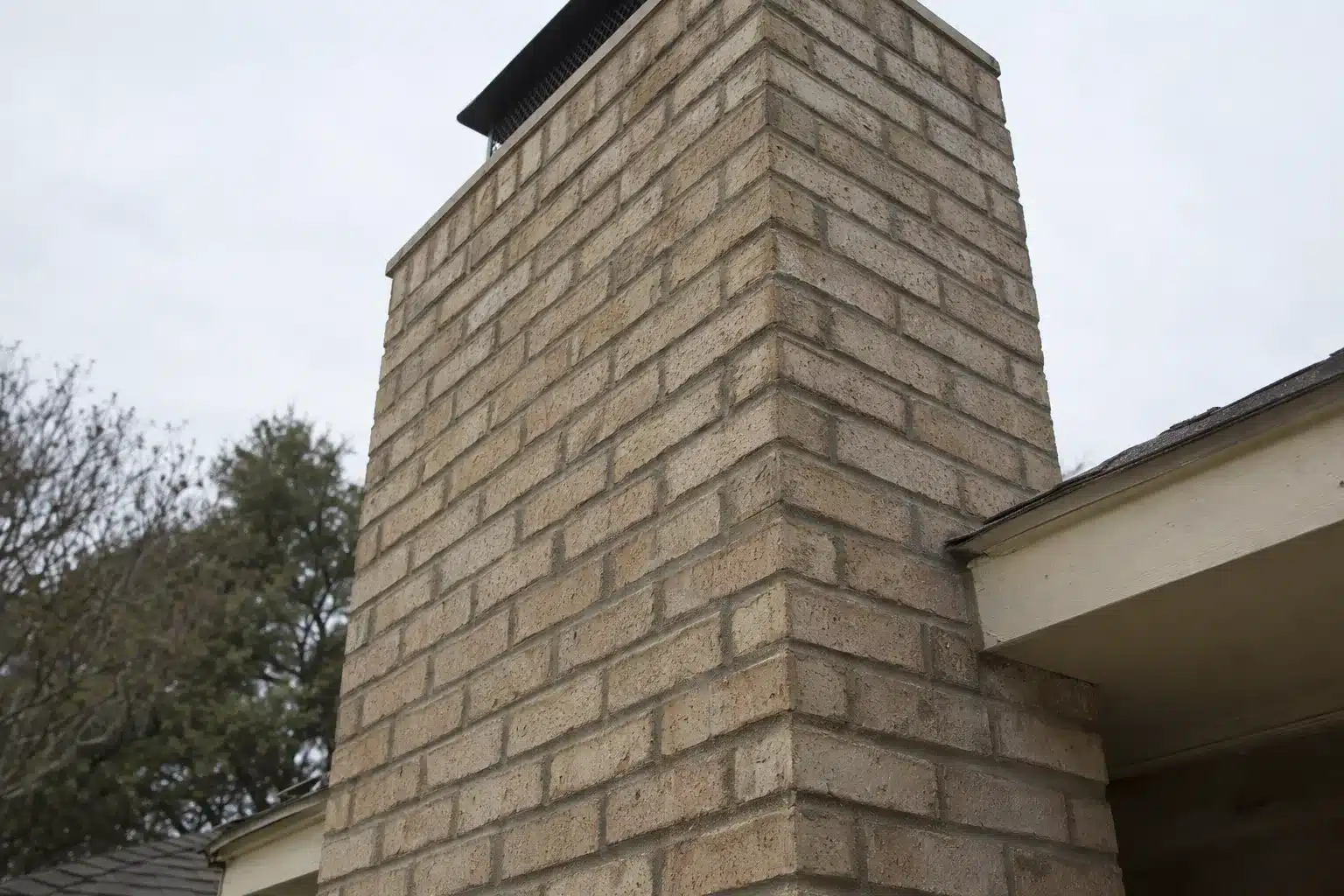
Mortar joints, brick face, chimney crown, and cap. The technician examines all surfaces reachable from a ladder. Mortar erosion, crown cracking, and cap damage are the most common findings on Dallas chimneys. A screwdriver probe of mortar joints is standard procedure here.
- Mortar joint condition
- Crown and cap integrity
- Brick face and spalling
Area 2
Firebox and smoke chamber
Firebox Interior
Refractory panels, firebox floor, smoke shelf, and damper. Cracked refractory panels and deteriorated damper hardware are the most frequent Level 1 findings inside the firebox on Dallas homes. The smoke chamber above the damper is also examined visually for joint erosion.
- Refractory panel condition
- Damper operation and seal
- Smoke shelf debris
Area 3
Flue and accessible liner
Flue Liner (Accessible Portion)
The flue liner is examined from the firebox opening and from the top of the chimney without camera equipment. If visible damage or heavy creosote deposits are observed from either access point, the technician will recommend escalating to a Level 2 inspection with camera documentation of the full liner length.
- Visible liner sections
- Creosote stage assessment
- Obstruction check
Three More Areas in Every Level 1
- 04Flashing condition.
The point where the chimney meets the roofline is examined for visible separation, rust, or failed sealant. Flashing failure is a leading cause of water intrusion on Dallas chimneys and is a standard Level 1 documentation item.
- 05Combustible clearances.
The technician verifies that combustible materials near the firebox opening and at the roofline meet code-required clearance distances. This is particularly relevant in older Dallas homes where framing modifications were made without permits.
- 06Appliance connection (where applicable).
For gas fireplace inserts or wood stove inserts, the connection between the appliance and the flue is examined for proper fit and seal. A loose or improperly sized connector is a carbon monoxide risk and a Level 1 reportable finding.
When Level 1 Is the Right Call
A Level 1 inspection is appropriate when the chimney has been in normal service with no changes to the heating appliance, no known damage events, and no change of fuel type. If any of those conditions have changed, NFPA 211 calls for a Level 2 inspection instead.
- Annual maintenance inspection: Level 1 is the correct starting point.
- Real estate transaction: Level 2 is required by NFPA 211 for property transfers.
- After a chimney fire: Level 3 is required to evaluate hidden damage in the structure.
- New appliance installation: Escalate to Level 2 before operating.
For a full comparison of all three inspection levels, see our Level 1 vs Level 2 vs Level 3 guide.
How a Level 1 Chimney Inspection Runs, Step by Step
01
Exterior Walk
Technician examines the chimney from ground level, then by ladder. Crown, cap, mortar, brick, and flashing are all documented before entry into the home.
02
Firebox Examination
Refractory panels, firebox floor, smoke shelf, and damper are inspected with a flashlight and probe. Clearances and combustible materials checked at the hearth opening.
03
Flue Visual
Flue liner examined from both the firebox access point below and the chimney opening above. Creosote stage, visible cracking, and obstructions noted.
04
Written Report
All findings documented in writing before the technician leaves. Each reportable item includes location, condition noted, and recommended action with urgency level.
What Is Often Added to a Level 1 Visit
A Level 1 inspection is frequently combined with other services in a single visit, since the chimney is already accessed and documented:
- Chimney sweep - creosote removal with rotary brush systems and HEPA containment, completed before or after the inspection.
- Level 2 inspection upgrade - if the Level 1 visual reveals findings that require camera documentation of the full flue.
- Waterproofing - applied after any masonry findings are resolved. Adds $150-$400 depending on chimney surface area.
- Flashing service - often scheduled at the same time when the Level 1 report documents flashing separation or rust.
- Firebox mortar repair - refractory mortar for interior joints is a separate product from exterior tuckpointing mortar and requires a different repair process.
Why Dallas Chimneys Need Annual Level 1 Inspections
Dallas does not experience the sustained freeze cycles of northern climates, but the Metroplex's weather pattern creates its own chimney stress. Summer heat above 100 degrees F causes masonry to expand. Brief but sharp winter freezes then contract it. That cycling opens mortar joints and hairline cracks in refractory panels faster than most homeowners expect.
Local clay soil expands significantly with moisture and contracts in drought. A chimney foundation sitting on shifting clay can develop stress cracks in the firebox and flue that a Level 1 inspection will catch before they become structural problems.
The NFPA 211 standard recommends annual Level 1 inspections for all chimneys in normal service. The Chimney Safety Institute of America supports this recommendation and defines what constitutes a qualified inspection under each level classification.
Before You Book a Level 1 Inspection
A few specifics that help you prepare for the inspection and understand what you will receive in return.
The written report is the deliverable, not the visit. Our Dallas chimney inspection service produces a written report that documents every surface examined, every finding, and every recommended action before the technician leaves your property.
Plan for 45 to 90 minutes
A thorough Level 1 inspection on a single-fireplace home typically takes 45 to 90 minutes. Multi-fireplace homes or chimneys serving wood stove inserts take longer. If a sweep is combined with the inspection, add another 30 to 60 minutes for HEPA containment setup, rotary brush cleaning, and debris removal.
Clear the firebox area before the visit
Remove any stored firewood, ash, or decorative items from inside and directly in front of the firebox. The technician needs unobstructed access to the firebox opening, smoke shelf, and damper. Clearing the area before arrival saves time and ensures nothing is missed during the interior examination.
Know your fireplace fuel type
Tell the technician whether the appliance burns wood, gas, or is a gas log insert before the inspection begins. Gas fireplaces require examination of the burner, ignition system, and venting connections that are not part of a wood-burning chimney inspection. Knowing the fuel type upfront ensures the correct inspection protocol is applied.
Ask about the upgrade path to Level 2
A Level 1 inspection can escalate to Level 2 on the same visit if the visual examination reveals conditions that require camera documentation. This is more efficient than scheduling a second appointment. Ask when booking whether a camera unit will be on the truck if you suspect liner damage or have not had an inspection in more than five years.
Service Areas
Our 12 crews serve the full Dallas-Fort Worth Metroplex, including:
Find services near you →Also Inspected During Level 1
Urgent Issues We Also Handle
Chimney Inspection Level 1 Dallas: Common Questions
01What does a Level 1 chimney inspection include in Dallas?
A Level 1 chimney inspection covers all readily accessible surfaces of the chimney system: exterior masonry, mortar joints, crown, cap, flashing, firebox interior, smoke shelf, damper, and the visible portions of the flue liner from top and bottom access points. No camera equipment is required. Every finding is documented in a written report. The scope follows the NFPA 211 standard and does not vary by technician or company.
02How much does a Level 1 chimney inspection cost in Dallas?
Level 1 chimney inspection costs in Dallas vary based on chimney configuration, number of fireplaces, and whether a sweep is included in the same visit. A standalone inspection on a single-fireplace home is typically less expensive than a combined sweep-and-inspect appointment. We do not publish a flat rate here because scope varies, but you can get specific pricing by calling or scheduling online. What you will always receive is a written report documenting every finding.
03How is a Level 1 different from a Level 2 chimney inspection?
The primary difference is camera access to the full flue liner. A Level 1 inspection examines the flue only from the two accessible endpoints. A Level 2 inspection adds a video scan of the entire liner length, which can reveal hidden cracks, mortar joint failure inside the flue, or liner deterioration not visible from either access point. See our full comparison at:
04Do I need a Level 1 inspection if I barely use my fireplace?
Yes. A chimney that sees infrequent use can still accumulate bird nests, wasp nests, or debris that blocks the flue and creates a carbon monoxide risk the first time the fireplace is lit. Mortar and masonry also deteriorate from weather exposure regardless of use frequency. NFPA 211 recommends annual inspection for all chimneys, not just those in heavy use.
05Can a Level 1 inspection be used for a real estate transaction in Dallas?
NFPA 211 specifically requires a Level 2 inspection for real estate transactions because property transfers represent a change of ownership and potentially a change in appliance use. A Level 1 inspection does not meet that standard for home sale purposes. If you are buying or selling a Dallas home with a fireplace, book a Level 2 inspection, not a Level 1.
06What common problems do Level 1 inspections find on Dallas chimneys?
The most frequent Level 1 findings our crews document on Dallas chimneys are:
- Mortar joint erosion on the exterior face and smoke chamber
- Cracked chimney crown allowing water intrusion
- Cracked or spalled refractory panels inside the firebox
- Stage 2 or Stage 3 creosote buildup in the flue requiring a dedicated cleaning
Flashing separation at the roofline and bird or wasp nests in the flue are also routine findings, particularly in late spring and early fall inspections.
07How long does a Level 1 chimney inspection take in Dallas?
A Level 1 inspection on a single-fireplace, single-story Dallas home typically takes 45 to 90 minutes from arrival to written report. Two-story chimneys or homes with multiple fireplaces take longer. If a chimney sweep with HEPA containment is combined with the inspection, add 30 to 60 minutes for the cleaning process. The written report is issued before the technician leaves the property.
- Level 1 vs Level 2 vs Level 3 Chimney Inspection: Which One Do You Actually Need?
- Level 2 Chimney Inspection Requirements Explained
- Chimney Inspection Dallas
- Level 1 Chimney Inspection
- Level 3 Chimney Inspection
- Level 2 Chimney Inspection
- Chimney Sweep Dallas
- Gas Fireplace Repair Dallas
- Level 1 vs. Level 2 vs. Level 3 Chimney Inspection
Schedule Your Level 1 Chimney Inspection in Dallas Today
Most Level 1 inspections are straightforward. The costly outcomes come from skipping them. A cracked refractory panel or blocked flue that goes undocumented for a season can become a fire event or a carbon monoxide incident with no warning.
Our crews have been performing chimney inspections in Dallas and across the DFW Metroplex since 1991. We inspect it, document it in writing, and tell you exactly what needs attention and what does not. The written report stays with you regardless of what you decide to repair.
The Chimney Inspection & Sweep · Dallas-Fort Worth Metroplex · In business since 1991 · Inspection & Cleaning Services · Cleaning Services · What Is a Chimney Sweep? · © 2026
Schedule Your Level 1 Chimney Inspection in Dallas Today
Most Level 1 inspections are straightforward. The costly outcomes come from skipping them. A cracked refractory panel or blocked flue that goes undocumented for a season can become a fire event or a carbon monoxide incident with no warning.
Our crews have been performing chimney inspections in Dallas and across the DFW Metroplex since 1991. We inspect it, document it in writing, and tell you exactly what needs attention and what does not. The written report stays with you regardless of what you decide to repair.
1991
Year Founded
33
Years Serving DFW
12
Active Field Crews
✓
Written Reports Every Job
The Chimney Inspection & Sweep · Dallas-Fort Worth Metroplex · In business since 1991 · Inspection & Cleaning Services · Cleaning Services · What Is a Chimney Sweep? © 2026
