
Chimney Waterproofing Cost in Dallas (2026 Guide): What Homeowners Should Expect
May 5, 2026
- By
- The One Chimney Sweep
- Chimney Service Experts
Want a clear checklist for Chimney Waterproofing Cost in Dallas (2026 Guide) before you call anyone? This guide is for homeowners who want real numbers, code insight, and practical next steps. At The One Chimney Sweep, we’ve been helping Dallas homeowners protect masonry chimneys for years of experience, and we’ve seen how small moisture issues turn into major repairs. We’ll break down what drives cost, what inspectors look for, and how to budget correctly. Last spring, our team inspected a Dallas home where missing crown sealant led to interior ceiling stains and damaged framing. The owner thought waterproofing was optional. It wasn’t. Delaying service often means paying for brick replacement, flashing repairs, and sometimes partial rebuilds. If you’re already seeing moisture issues, start with a professional chimney inspection before estimating waterproofing costs.
What Inspectors and Insurance Carriers Expect in 2026

Dallas experiences heavy spring storms, high humidity swings, and intense summer heat. Masonry chimneys expand and contract, and wind-driven rain penetrates weak mortar joints. That is why local code compliance and proper materials matter. Inspectors increasingly flag improper chimney caps, flashing failures, and unsafe masonry conditions during resale and renovation projects.
- City of Dallas Adopted 2021 International Residential Code (with local amendments) – Requires chimneys to be constructed and maintained to prevent water penetration and structural deterioration (see IRC R1003 masonry chimney provisions). Non-compliance can result in failed inspections during home sales or renovation permits.
- Texas Department of Insurance Windstorm Building Code Requirements – Establishes standards for components exposed to wind-driven rain. Improper flashing or unsecured chimney caps may affect insurance eligibility or claims.
- Texas Property Code §92.052 – Requires property conditions that materially affect health or safety to be repaired. Severe chimney water damage in rental properties may create legal exposure for landlords.
- Vapor-permeable waterproofing only (never film-forming sealers)
- Proper cricket installation on wider chimneys to divert water
- Stainless steel or copper chimney caps secured to resist uplift
- Step and counter flashing sealed with high-temperature silicone
- Documented inspection photos for insurance or resale records

What Drives Price and How to Plan Ahead
Chimney waterproofing costs vary because no two masonry structures age the same way. In our experience, Dallas homes built in the 1970s – 1990s often require joint repairs before sealant application. Typical 2026 cost ranges may fall between:
- $350 – $750 for basic waterproofing on a standard single-flue chimney in good condition
- $800 – $1,500 when minor repointing and crown sealing are needed
- $2,000+ if brick replacement, partial rebuild, or flashing reconstruction is required
- Site complexity (roof pitch, height, accessibility)
- Material costs (quality silane/siloxane sealants, stainless caps)
- Total scope (repointing depth, crown rebuild, flashing work)
Schedule a Professional Chimney Evaluation
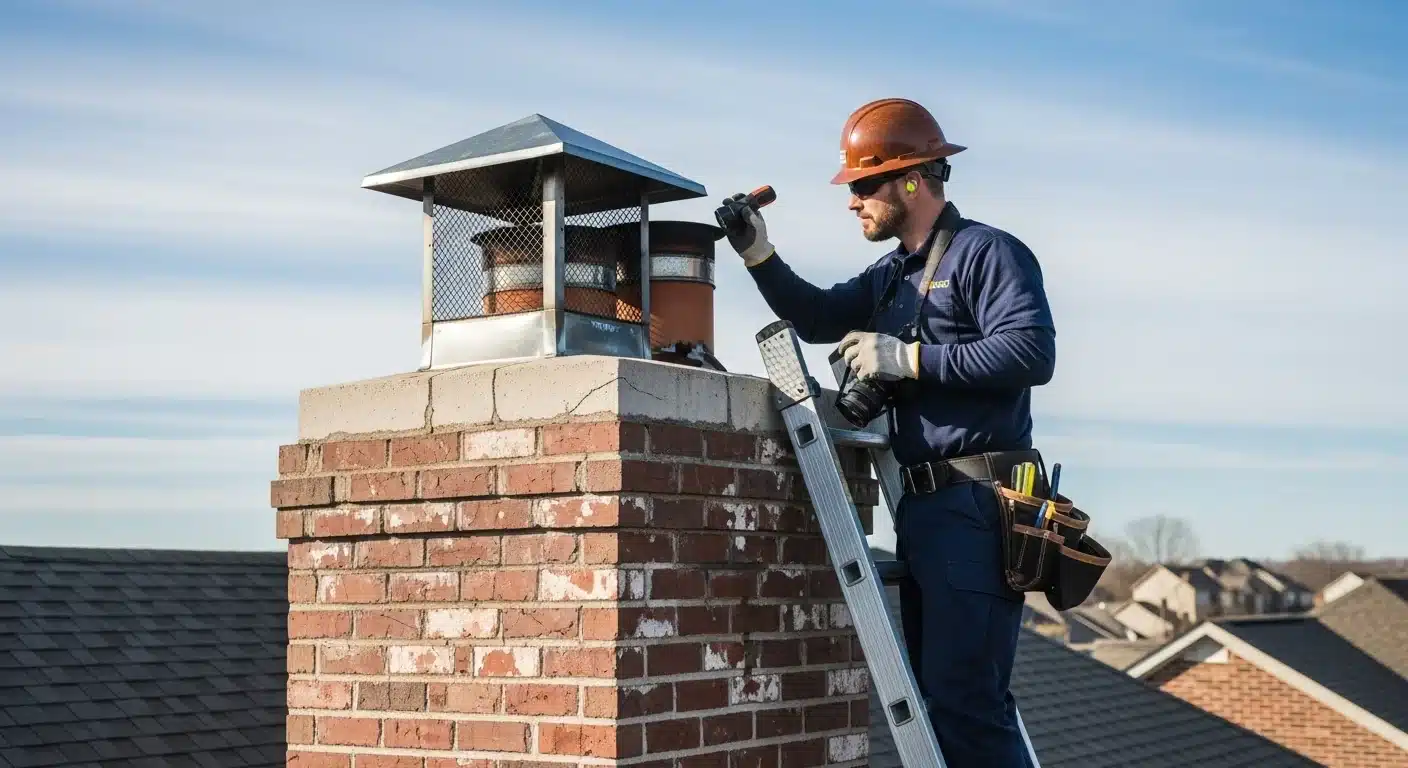
If you’re comparing estimates or wondering whether waterproofing is necessary, a thorough on-site evaluation gives you clarity. We assess masonry condition, moisture intrusion, flashing integrity, and cap security before recommending any work. You receive documented findings, realistic pricing ranges, and clear next steps. Water damage rarely stays isolated to the chimney exterior. It often spreads into framing, drywall, and metal components. Addressing it early protects your home’s structure and avoids escalating repair costs. Whether you’re maintaining your home, preparing for resale, or responding to visible moisture, our team is ready to provide a detailed inspection and straightforward recommendations tailored to Dallas conditions.
FAQs
How do I know if my chimney in Dallas needs waterproofing?
Look for white powdery residue (efflorescence), cracked mortar joints, spalling brick faces, rusted damper components, or water stains on ceilings near the fireplace. In Dallas, heavy rainstorms combined with long dry spells cause masonry to absorb and release moisture repeatedly, which accelerates joint deterioration. If you notice musty odors after rain or see small pieces of brick in the firebox, moisture is likely entering the structure. We recommend a professional inspection every year or two, especially for chimneys over 20 years old. A moisture meter reading and exterior crown evaluation can confirm whether waterproofing alone will solve the issue or if repairs are required first. Acting early usually keeps costs lower and prevents structural damage to framing and interior finishes.
Is chimney waterproofing different from sealing the crown?
Yes. Crown sealing addresses cracks in the concrete top of the chimney, typically using an elastomeric coating designed to flex with temperature changes. Full chimney waterproofing involves applying a vapor-permeable water repellent to the entire masonry surface. The two services often go together, but they solve different problems. Crown cracks allow direct vertical water entry. Brick and mortar absorb wind-driven rain horizontally. If you only seal the crown and ignore porous brick, moisture can still penetrate the chimney walls. We evaluate both areas during inspection. In many Dallas homes, we perform minor crown repairs first, allow proper curing time, and then apply a breathable silane/siloxane treatment to the masonry for comprehensive protection.
What is the average chimney waterproofing cost in Dallas in 2026?
For 2026, basic waterproofing may range from $350 to $750 for a standard chimney in good condition. If minor mortar repairs or crown sealing are needed, costs might fall between $800 and $1,500. Larger restoration projects involving brick replacement or flashing repair could exceed $2,000. Pricing fluctuates based on three main factors:
- Site complexity (roof height, pitch, and safety setup)
- Material costs (quality breathable sealants and metal components)
- Total scope (extent of repointing, crown rebuilding, flashing replacement)
Can I apply chimney waterproofing myself?
DIY waterproofing is possible for single-story homes with safe roof access, but it comes with risks. Proper surface preparation is critical. If mortar joints are deteriorated, applying sealant over them traps moisture and accelerates damage. Many retail sealers are film-forming products that do not allow vapor to escape. We often correct DIY jobs where the wrong product was used or flashing defects were overlooked. Professional crews use commercial-grade silane/siloxane solutions and verify coverage rates to manufacturer standards. We also inspect flashing, crown condition, and cap security before applying anything. If you choose DIY, ensure the product is vapor-permeable and rated specifically for exterior masonry chimneys. When in doubt, an inspection first can prevent expensive corrections later.
How long does chimney waterproofing last?
A high-quality, vapor-permeable waterproofing treatment typically lasts 5 to 10 years, depending on sun exposure and storm intensity. South- and west-facing chimneys in Dallas often experience faster wear due to UV exposure and prevailing storm patterns. Longevity depends on proper preparation. Repointed mortar, a solid crown, and secure flashing allow the water repellent to perform as designed. We recommend periodic inspections to check for new cracks or mortar separation. Maintenance steps include keeping a secure chimney cap in place, trimming overhanging tree branches that trap moisture, and addressing small cracks immediately. Regular monitoring extends the life of the waterproofing treatment and reduces the chance of hidden structural damage.
What chimney problems are most common in Dallas?
In Dallas, we frequently see mortar joint erosion, crown cracking from heat expansion, and flashing separation caused by seasonal movement between roofing and masonry. Wind-driven rain during spring storms also exposes weak points in brickwork. Older homes often lack chimney crickets, which are small peaked structures installed behind wider chimneys to divert water. Without them, water pools and accelerates masonry deterioration. We also encounter rusted chase covers and improperly secured caps after strong wind events. Addressing these issues early keeps repair costs manageable. Regular inspections are especially important after major storms or roof replacements to ensure flashing remains watertight.
What should I look for when hiring a chimney waterproofing professional?
Look for a company that performs a full inspection before quoting waterproofing. The provider should explain whether repointing, crown repair, or flashing adjustments are required first. Ask about product type – specifically whether they use breathable silane/siloxane sealants rather than acrylic coatings. Verify insurance coverage and experience with Dallas building code requirements. Request photo documentation before and after the project. Reputable professionals will provide realistic timelines and explain maintenance expectations. Avoid companies that offer extremely low pricing without inspecting the chimney structure. Waterproofing applied over structural defects often leads to repeat repairs and greater long-term costs.
Is chimney waterproofing urgent or can it wait?
Chimney waterproofing is rarely an emergency, but visible water entry should not be ignored. If you notice active leaks during storms, interior staining, or loose brick fragments, schedule service promptly. In the meantime, avoid using the fireplace if moisture is entering the flue system, as water can damage metal components and liner systems. You can visually check that the chimney cap is intact and clear of debris, but avoid climbing steep roofs without proper safety equipment. Most moisture-related chimney damage progresses gradually. Addressing it within weeks rather than months often prevents larger masonry or framing repairs. A professional evaluation provides clarity on urgency and recommended next steps.

Our mission is to save lives by providing superior service at reasonable prices.
Chimney repair is one of our main services.
We also offer a free home fire safety check at every service appointment.
Chimney repair is one of our main services.
We also offer a free home fire safety check at every service appointment.
Information
Service Areas
- Dallas
- Plano
- Carrollton
- Irving
- McKinney
- Frisco
- Allen
- Garland
- Richardson
- Addison
- Arlington
© 2024 – 2025 | All Rights reserved by The Chimney Inspection & Sweep
Powered By Rank First Labs