
Convert Your Wood-Burning Dallas Fireplace to Gas Logs Without the Wood, Ash, and Annual Sweep
One installation eliminates recurring wood fuel cost and most maintenance burden – permanently.
Gas Log Installation in Dallas: Typical price $378 – $699

Gas Log Installation Converts an Existing Fireplace to Gas Without Rebuilding It
Gas log installation replaces a wood-burning fuel source with a gas-fed log set inside your existing firebox opening.
No new firebox construction. No surround demolition. The log set sits inside the firebox you already have. A gas supply line connects at the hearth, the burner assembly is positioned under the log arrangement, and the configuration – vented or vent-free – is determined by your damper condition and flue.
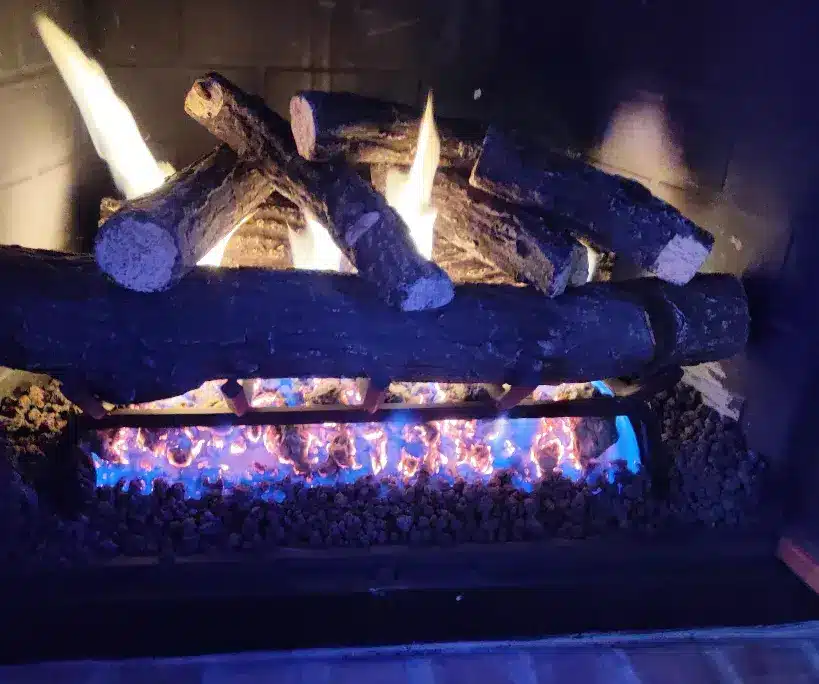
That configuration decision matters more than the log set itself. A vented gas log set burns with the damper open. Combustion gases exit through the flue, exactly as wood smoke does. The flame is tall and yellow, with a realistic ember bed. This is the correct choice for a masonry fireplace with a functional flue.
An unvented gas log set – sometimes called vent-free – burns without an open flue. It produces more heat output and loses nothing up the chimney. But it requires sufficient room volume and air exchange. It also cannot be installed in every firebox configuration. Texas has specific permissibility requirements for vent-free appliances that affect some Dallas-area installations.
Both options are available. The right one depends on what your firebox and flue can support – not on which set costs more or looks better in a showroom photo.
Dallas Fireplaces Burn Wood for Four Months, Then Sit Idle for Eight
The economics of wood-burning in Dallas shift when you run the numbers across a full year.
Dallas’s heating season runs roughly November through February. That is four months of occasional use. Cord wood in the DFW market runs between $200 and $350 per cord delivered, depending on wood type and the season. A homeowner burning two or three times a week through that window goes through a cord, sometimes more.
On top of the wood cost comes the annual chimney sweep – required for wood-burning fireplaces because creosote accumulates on the flue liner with each use. Add the time spent managing wood storage, where DFW’s humidity and warm shoulder-season temperatures make outdoor wood storage a consistent maintenance task.
Gas log sets for existing Dallas fireplaces are sized to the room’s actual heating load – not the maximum BTU output the manufacturer lists on the box. A log set that overloads a small living room makes the space uncomfortable within 20 minutes. A log set undersized for an open-plan first floor never quite takes the chill off. BTU output is a configuration variable, not a default.
After conversion, the gas logs are available the moment the thermostat tells you it is cold enough to light them. No cord wood. No annual sweep requirement for the flue. No ash cleanup after every fire.

What the Assessment Finds Before Any Log Set Gets Ordered
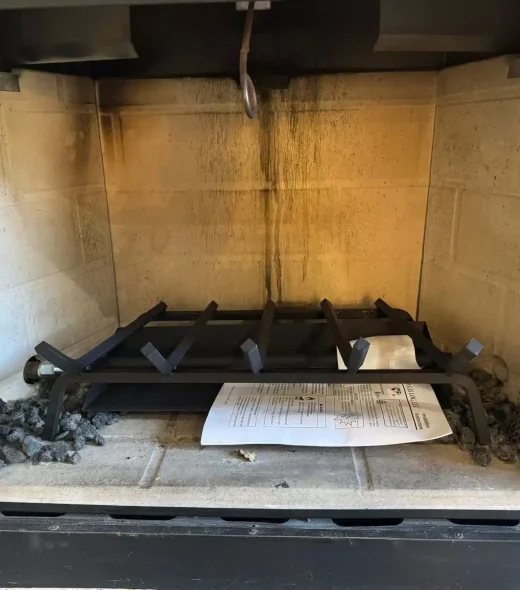
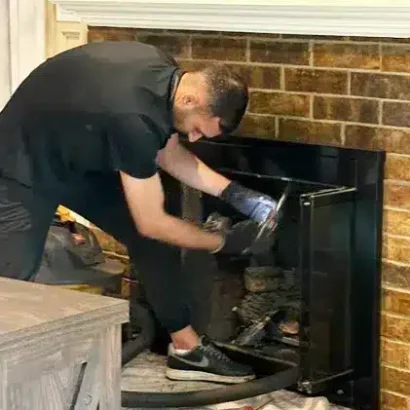
Before a single component is ordered, the firebox, the damper, and the flue condition are assessed.
The Chimney Inspection & Sweep has performed gas log installations across the DFW market since 1991. In that time, the pattern is consistent: wrong configuration, wrong BTU, and wrong connection point are the outcomes when a log set is ordered before the firebox is checked.
Here is how a typical gas log installation visit starts. The damper is opened and the condition of the plate and the throat is examined. A damper that does not fully open restricts a vented log set’s performance and can cause combustion gas rollout into the room. If the damper is in poor condition, that is addressed before the log set goes in – not after.
Next, the firebox opening is measured. Width, height, and depth. These three numbers determine which log set sizes physically fit and how the burner assembly needs to be positioned for realistic flame distribution. Log sets that are too wide for the opening look wrong. Burner assemblies that sit too close to the firebox back create uneven flame patterns.
Then the flue configuration is confirmed. Single-flue or multi-flue. Metal damper or top-sealing. Round or rectangular tile. These details determine whether a vented set will draft correctly at the BTU output selected.
This information is gathered before anything is ordered. The homeowner knows what configuration is appropriate, what BTU range fits the room, and why – before spending a dollar on equipment.
Gas Supply Connection Is Coordinated, Not Assumed
Every gas log installation includes coordination with the gas supply line – availability is confirmed before booking.
Some Dallas homes already have a gas stub-out at the firebox from a previous appliance or builder rough-in. Some do not. Gas availability and connection point are confirmed before the installation appointment is scheduled.
If no gas line is present at the firebox, The Chimney Inspection & Sweep coordinates with a licensed plumber for the supply line run before the installation date is set. The installation visit does not happen until gas supply is confirmed and ready. No homeowner receives a half-installed log set because a gas line issue was discovered on the day of the appointment.
After connection, gas pressure is verified at the log set before the first ignition test. Pressure that is too low produces a lazy flame that does not distribute across the full log arrangement. Pressure that is too high creates a flame that runs too hot for the selected log set’s rating. Verification takes ten minutes and prevents the three most common post-installation performance complaints.

Our Standards for Gas Log Installation
Every installation follows a consistent pre-to-post checklist, not an improvised sequence.
- Firebox dimension measurement before log set selection – width, height, and depth recorded
- Damper condition verification before configuration decision is finalized
- Vented vs. unvented determination based on flue condition and Texas permissibility requirements
- BTU sizing calculated against the room’s square footage and ceiling height, not defaulted to maximum
- Gas supply confirmation before the installation appointment is booked
- Pressure verification at the connection point after hookup, before first ignition
- Log placement for flame distribution – burner assembly and log arrangement positioned for realistic appearance across the full set
- Post-installation operation demonstration with the homeowner present before crew departure
How Gas Log Installation Works
Phase 1 - Firebox and Flue Assessment
The installation visit begins with a physical assessment of the firebox opening, the damper, and the accessible flue. Dimensions are recorded. Damper travel is tested. Flue condition is noted. The assessment produces a configuration recommendation – vented or unvented – and a BTU range appropriate for the room.
This assessment is separate from the installation itself. If the assessment reveals a damper problem or a flue condition that needs attention before a vented log set can be installed safely, that work is scheduled first.
Phase 2 - Equipment Selection and Gas Supply Coordination
After the assessment, the log set is selected to match the firebox dimensions, the confirmed configuration, and the BTU range. Equipment is matched to the specific opening, not pulled from a generic inventory.
Gas supply availability is confirmed at this stage. If a plumber is needed for the supply line, that coordination happens before the installation appointment is booked. The installation crew does not arrive without confirmed gas access.
Phase 3 - Installation, Pressure Verification, and Demonstration
On installation day, the burner assembly is set into the firebox, the log arrangement is placed over it, and the gas connection is made. Pressure is verified at the connection point. The system is ignited and observed for flame distribution across the full log set.
The homeowner watches the first ignition. The technician explains how the ignition system works, how to adjust flame height if the log set includes that feature, and what normal operating sounds and flame behavior look like for the specific set installed.
Pricing
Gas Log Installation Cost in Dallas
Typical price ranges for gas log installation across Dallas and the DFW Metroplex. Smaller, simpler jobs sit at the low end.
| Service | Typical price |
|---|---|
| Gas log installation | $378 – $699 |
| New gas log systemWith burner and remote | $1,800 – $3,200 |
| Premium gas log sets and Fyre SpheresReal Fyre | $1,459 – $2,989 |
| Fire glass10 lb | $100 |
| Cleaning plus gas logs package | $828 – $2,100 |
Your exact price is confirmed on site before any work starts. Smaller, simpler jobs sit at the low end of each range. Our $79 chimney safety inspection is waived when you book the repair.
Areas We Serve
Gas log installation is available throughout Dallas and across the DFW Metroplex.
The Chimney Inspection & Sweep serves Dallas, Plano, Carrollton, Irving, McKinney, Frisco, Allen, Garland, Richardson, Addison, Arlington, and surrounding communities. With 12 active crews dispatched across the service area, installation appointments are available without extended lead times even during the fall pre-season booking window.
Ready to Convert Your Dallas Fireplace to Gas Logs?
The assessment visit is where the project starts – not after the log set is ordered.
Call The Chimney Inspection & Sweep at 972-884-5553 or email info@theonechimneysweep.com to schedule your firebox assessment. Tell us your fireplace type and room size, and we’ll confirm the configuration options before anything is ordered. Serving Dallas and the DFW Metroplex since 1991.

Chimney repair is one of our main services.
We also offer a free home fire safety check at every service appointment.
Information
Service Areas
- Dallas
- Plano
- Carrollton
- Irving
- McKinney
- Frisco
- Allen
- Garland
- Richardson
- Addison
- Arlington
© 2024 – 2025 | All Rights reserved by The Chimney Inspection & Sweep
Powered By Rank First Labs