Dallas Chimney Wasp Nest Located and Removed - Entry Point Capped Before Nesting Returns
Smoke shelf, damper plate, and flue cap inspected – nest location determines removal method.
Chimney Wasp Nest Removal in Dallas: Typical price $241
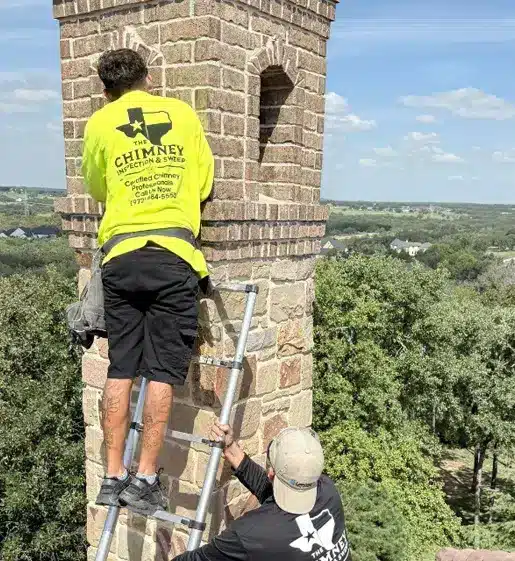

Chimney Wasp Nest Removal Starts With Finding the Nest
Where a wasp nest is located inside a chimney determines every decision that follows.
That is not a technicality. It is the difference between a treatment that works and one that disturbs the colony without resolving it. Paper wasps and yellow jackets build in different zones. A paper wasp nest on the smoke shelf sits just above the firebox opening – accessible from below. A yellow jacket colony deeper in the flue or behind the damper plate requires a completely different approach. Removing the colony without confirming its location first produces incomplete results and leaves the entry point intact for next spring.
Chimney wasp removal in Dallas, TX is a two-part job: find the nest, then remove it. The cap installation that follows closes the entry point so the problem does not repeat.
Why Dallas Chimneys Draw Wasps Every Spring
DFW’s warm springs give wasps a long nesting window – and uncapped flues are a preferred site.
Dallas typically sees temperatures in the upper 60s and 70s by early March. That is early enough for paper wasps to begin scouting nesting sites before most homeowners have thought about spring chimney service. An uncapped flue offers exactly what a nesting colony needs: shelter from wind and rain, a dark interior cavity, and a narrow entrance that limits exposure.
Here is what most homeowners do not realize about wasp nesting in DFW: the first queen to establish a nest in a flue often returns to the same chimney the following year if the entry point is still open. She overwinters nearby, then scouts the same location again. One removal without a cap is a temporary fix. The permanent solution includes sealing the entry point before the next spring season starts.
Chimney wasp removal calls across the Dallas area peak between April and June. That timing reflects when colonies grow large enough to become visible – workers entering and exiting the flue or cap opening in numbers a homeowner notices from the yard.
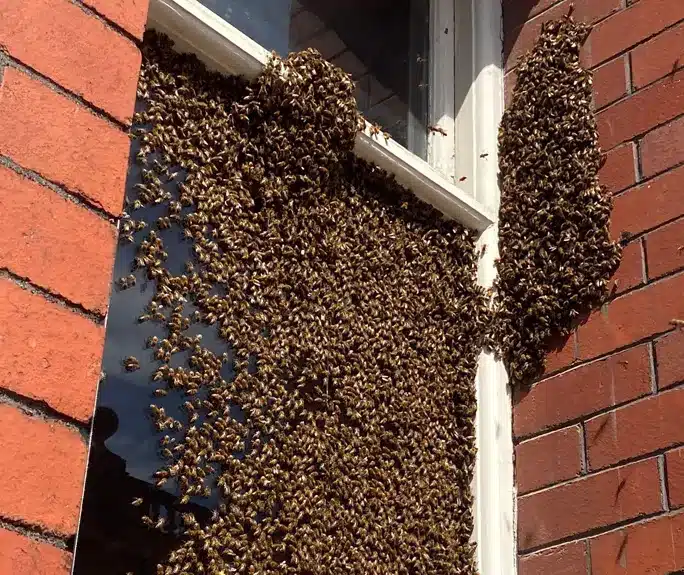
What a Technician Found on a Garland Call Last May
The homeowner said wasps were coming from the fireplace. That told me almost nothing about where the nest actually was.
- Field account from a technician at The Chimney Inspection & Sweep
I started at the cap. The existing cap had a gap on the south-facing side where the mesh had corroded away – maybe two inches of open space. That was the entry point, but the colony location was still unknown. Paper wasps sometimes hang the nest right under the cap. Yellow jackets go deeper.
I dropped a camera into the flue from above. The main flue passage was clear – no nest attached to the liner tiles. I went to the firebox next. The smoke shelf had a paper wasp nest about the size of a dinner plate, built across the left rear corner. Active. Forty or fifty workers moving on it.
That location mattered. It meant I could treat and remove from below without accessing the flue interior. I applied a residual insecticide labeled for enclosed spaces, waited for activity to stop, and removed the nest structure manually. The damper plate and smoke shelf were both cleared and inspected.
Then I went back to the cap. The corroded mesh cap came off. I measured the flue opening – a 13×13 clay tile liner – and installed a stainless steel cap with full mesh sides and a secure mounting system. That cap will not corrode and does not leave gaps. The homeowner had wasps in the chimney for the second consecutive spring. That was the last time.
The nest location decided everything: the access point, the treatment method, the removal approach, and which cap fit the flue. Starting with the camera before any treatment is how this job gets done correctly.
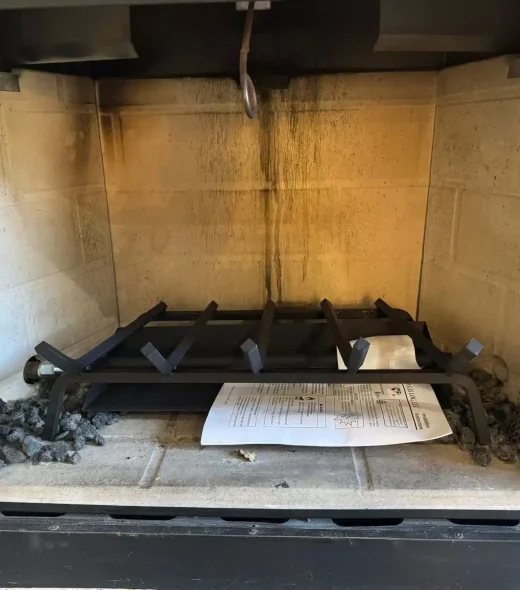
Wasp Activity Near the Fireplace Opening
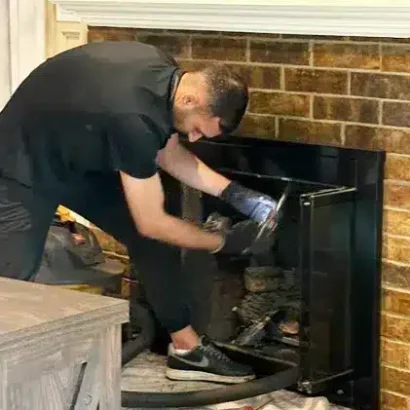
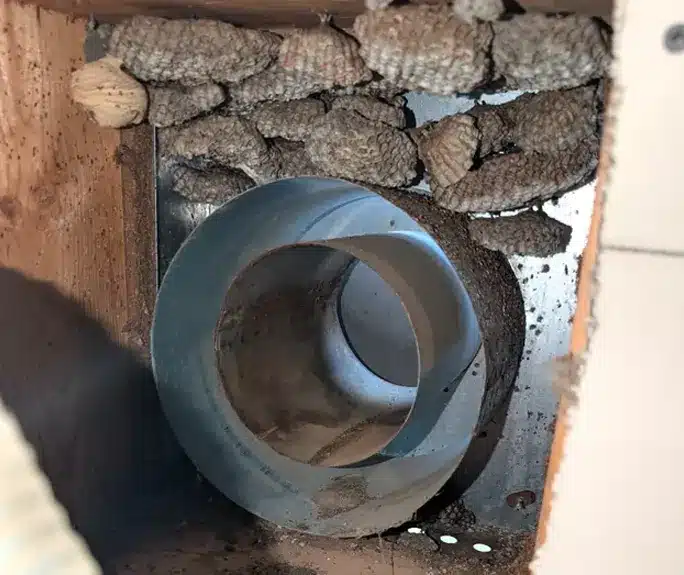
Wasps flying near the damper or firebox is a specific symptom – and it points to nest location.
Homeowners sometimes see wasps inside the house near the fireplace, not just at the chimney exterior. That typically means the colony is below the damper, on the smoke shelf, or the damper plate has degraded and left the firebox interior open to the flue.
When that happens, we check the damper condition as part of the wasp removal visit. A warped or corroded throat damper that no longer seals is both an entry point for insects and an ongoing draft and odor issue. If the damper is part of the problem, we document that finding and present it as a separate scope item – either repair or replacement – so the homeowner has a complete picture before deciding how to proceed.
Wasps in chimney situations in Dallas, TX are not all the same call. The approach follows what the inspection finds.
Our Standards for Chimney Wasp Removal
Nest location confirmed before treatment. Entry point capped before the crew leaves.
- Camera assessment first. We confirm nest location from above and from the firebox level before selecting a treatment method.
- Insecticide labeled for enclosed chimney cavities. Applied at the correct location – not a general exterior spray at the cap opening.
- Full nest structure removal. Residual comb left in the flue becomes a draw for future nesting and other insects.
- Smoke shelf and damper inspection included. Every wasp removal visit confirms these components are clear and functional.
- Stainless steel cap installation. Mesh-sided, measured to the actual flue opening, secured against removal by wildlife or wind.
- Documentation of nest location and entry point. Homeowner receives a written summary of findings before the crew leaves.
The job is not finished until the entry point is gone.
How We Handle Chimney Wasp Removal
Camera-First Diagnostics
The visit starts with a visual inspection of the cap and chimney exterior. We identify any existing gap, failed mesh, or open tile that could serve as an entry point. We then insert a camera from above to locate the nest in the flue passage, and open the damper to inspect the smoke shelf from below. Nest location is confirmed before any treatment begins. This step takes 10 to 15 minutes and determines every decision that follows.
Matched Treatment and Removal
Treatment method is matched to nest location and colony type. Paper wasp nests on the smoke shelf are accessible from below – we treat, wait for activity to cease, and remove the nest structure manually. Yellow jacket colonies established deeper in the flue or behind the damper frame require a different access approach and a longer activity window before manual removal is safe. Every nest structure is physically removed from the chimney cavity. Comb is not left behind.
Post-Service Verification
After nest removal, the damper is checked for full closure. The smoke shelf is cleared and photographed. We install the replacement cap – measured to the exact flue opening dimensions – and verify the mount is secure before leaving the property. The homeowner receives a written account of the nest location, the entry point closed, and the cap installed. That document is their record that the job is complete.
Pricing
Chimney Wasp Removal Cost in Dallas
Typical price ranges for chimney wasp removal across Dallas and the DFW Metroplex. Smaller, simpler jobs sit at the low end.
| Service | Typical price |
|---|---|
| Wasp nest removal and treatment | $241 |
| Animal entry prevention or bird spikes | $250 |
Your exact price is confirmed on site before any work starts. Smaller, simpler jobs sit at the low end of each range. Our $79 chimney safety inspection is waived when you book the repair.
Ready to Schedule Chimney Wasp Removal in Dallas?
Nest location confirmed, colony removed, entry point capped – one visit.
Call The Chimney Inspection & Sweep at 972-884-5553 or send a message to info@theonechimneysweep.com. Tell us where you are seeing wasp activity and we will get a crew scheduled. Chimney wasp nest removal in Dallas, TX is available across the full DFW service area.
Chimney repair is one of our main services.
We also offer a free home fire safety check at every service appointment.
Information
Service Areas
- Dallas
- Plano
- Carrollton
- Irving
- McKinney
- Frisco
- Allen
- Garland
- Richardson
- Addison
- Arlington
© 2024 – 2025 | All Rights reserved by The Chimney Inspection & Sweep
Powered By Rank First Labs